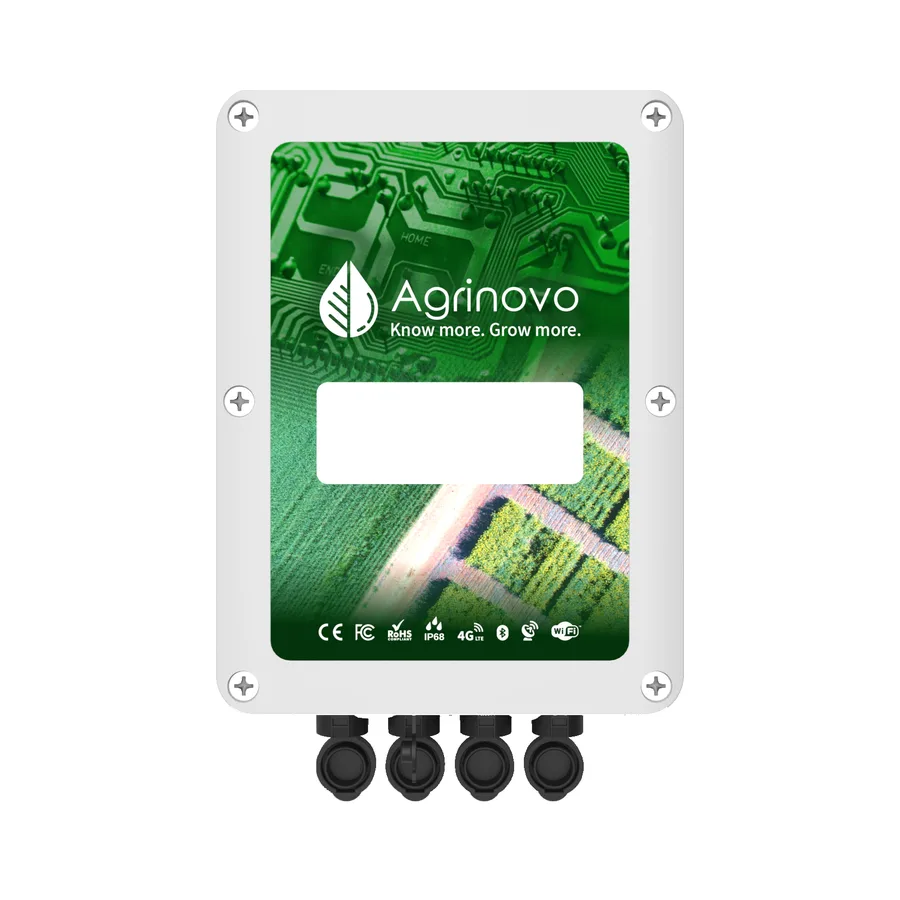
Cellular, because poultry houses are rarely near the office
Each controller carries its own 4G-LTE connection, so a house at the far end of the farm reports as reliably as one next to the office.
Readings are logged on the controller when the signal drops and sent when it returns, so the history has no hole in it.
Batteries, because the power cut is when you need it most
The controller runs on rechargeable batteries with solar or DC charging, so it keeps measuring and reporting when the house loses mains power.
A power failure is exactly the moment fans stop and temperature climbs, and a monitor that goes dark with the house tells you nothing.
Any port takes any sensor, set from the cloud
Each of the four ports can be configured remotely for RS485 Modbus, analog, digital, I²C, 1-Wire or SDI-12, so adding a sensor to a house later needs no new controller and no firmware change.
The same controller that starts with an ammonia detector can take a fan current sensor or a silo radar next season.
A broken sensor reports a fault
When a sensor cable is cut, unplugged or shorted, the controller reports that port as faulty and the dashboard shows it, instead of storing a reading from a sensor that is no longer there.
Independent of the climate controller
Henlytics has its own sensors and its own controller, so it works the same beside any controller brand and still reports if the climate controller itself fails.
Updates arrive over the air
Controller firmware is updated remotely through the cloud, so nobody has to visit the house to keep it current.