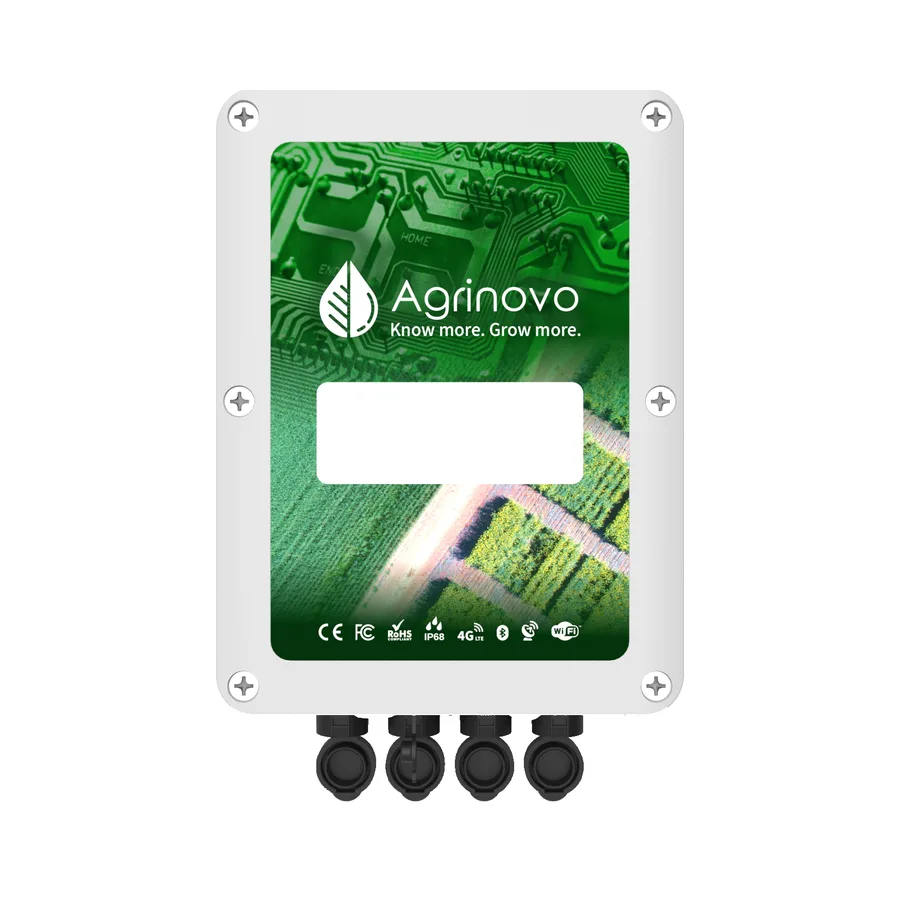
Genesis
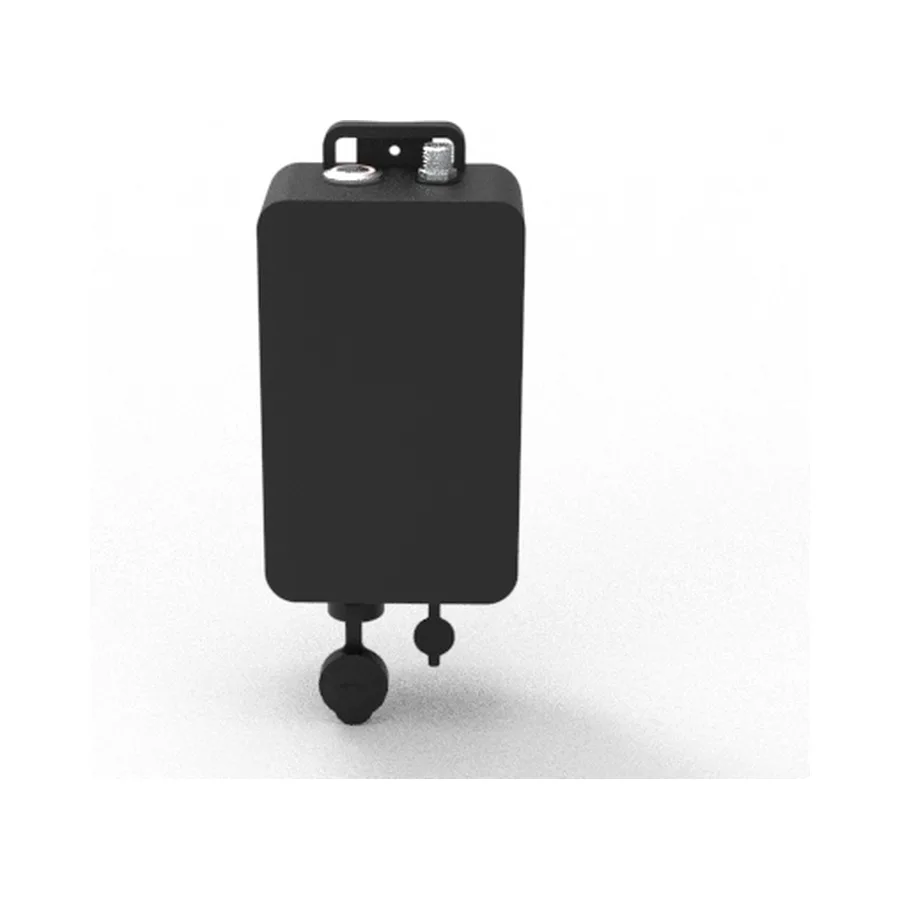
SKU: Genesis Lite
Compact controller for one sensor at one point of the farm.
The Genesis Lite is a small controller with one sensor port. It is made for the measuring points of a poultry farm that stand on their own: the feed silo across the yard, the water tank on the rise behind the houses, the egg room beside the packing shed. It is fixed at the point itself, the sensor plugs into it, and the reading travels from there by radio. No cable has to be pulled back to a house.
It is about one quarter of the size of the standard Genesis controller, small enough to sit on a silo leg or a tank stand. The housing is rated IP65, so it is dust-tight and resists water, and it works from -20 to 70 °C, which covers an unshaded yard in summer and in winter.
Inside is a single rechargeable 16340 lithium-ion cell of 950 mAh. Wi-Fi and Bluetooth are built in, and 4G-LTE cellular is available for points that no farm network reaches.
A level sensor on a silo roof is the commonest job for a Lite. Silos are often placed for the feed truck and stand at the far gable or on the other side of a concrete apron. Running a sensor cable from the silo roof into the house means conduit, a wall entry and a trench or an overhead span. With a Lite on the silo leg, the cable from the sensor is short and ends at the silo.
The farm water tank is the second. It usually stands at the highest point of the site or next to the borehole, well away from any building with a control panel. A level meter on the tank with a Lite beside it shows the stored water of the whole farm, and a tank that has stopped filling is seen while it is still full enough to supply the houses.
The third is the egg room. Hatching eggs and table eggs are held at a controlled temperature and humidity between collection and dispatch, and a cooler that fails on a Friday evening is otherwise found on Monday. One temperature and humidity sensor on the wall of the room, with a Lite next to it, keeps a continuous record of the conditions the eggs were held in.
The same applies in a hatchery, where the egg store is often a room of its own, away from the machines and their panels.
The port is a keyed connector that carries both power and data. It accepts the same sensors as the ports of the larger controller, and what it reads is a setting made remotely. The interfaces it covers are RS485 (Modbus-RTU), analog, digital, I2C, 1-Wire and SDI-12, which takes in the level, climate, water and current sensors of the range.
If the job at a point changes, for example when a tank level meter is moved to another tank and a water meter takes its place, the new sensor is plugged in and the port is set for it from the office. The firmware of the controller is updated over the air in the same way.
A silo or a tank rarely has a socket nearby, and the Lite is designed around that. The controller spends nearly all of its time asleep. On its schedule it wakes, switches on the supply to the sensor at 5 V or 12 V, takes the reading, sends it and goes back to sleep. The sensor is powered only for the moment of the reading.
The cell is kept charged through an input that accepts 6 to 32 V DC. At an outdoor point this is a small solar panel fixed above the controller. Where a DC supply already exists, for example at a silo with a powered auger panel or in an egg room, a fixed supply does the same work. How often the point is read is part of the setup, and it is matched to the job: a silo level changes slowly, while an egg room is worth reading more often.
Because the power is its own, a Lite at the water tank goes on reporting through a mains failure on the farm, which is one of the days when the amount of stored water matters most.
Two things decide the connection: what reaches the point and how far it is from the office. An egg room next to the farm office or the packing shed is normally inside the Wi-Fi of the building, and the Lite joins that network on 2.4 GHz. A silo at the end of a long row of houses, or a tank at the top of the site, is usually beyond it. For those points the Lite is supplied with 4G-LTE cellular and connects wherever a mobile phone has coverage.
Check the coverage at the mounting point itself before ordering, with a phone in your hand at the silo leg or the tank stand. Tell us what you find and we will supply the version that fits. Bluetooth 5.0 is built in for access to the controller from close by.
Fix the Lite at the measuring point, as close to the sensor as is practical, so that the sensor cable is short. Mount it vertically with the connector facing down. In that position rain runs off the housing and away from the port.
The choice follows the number of sensors at the place. The Lite has one port and one battery and suits one sensor at a point of its own. The standard Genesis has four ports and two batteries, with 4G-LTE as its normal connection, and suits the inside of a poultry house, where climate, air quality, water and fan sensors come together on one wall. A silo that stands against the gable of a house can simply use a spare port of the house controller. A silo on the other side of the yard is a job for a Lite.
The two models work side by side on one farm. The readings from a Lite appear in the same Henlytics account, on the same screens and in the same history as those from the house controllers, so the silo across the yard is listed next to the house it feeds. The grower sets a limit for the reading and receives an alert on the phone when it is crossed, repeated until it is acknowledged. The controller also raises an alert when it goes offline or when its battery runs low.
When you ask for a quote, tell us what the point is, how far it stands from the nearest house, whether it has power and what coverage it has. We will suggest the sensor, the connection and the charging to go with it.
Mount the controller vertically at the measurement point with the connector facing down, and confirm network coverage there. It runs on one rechargeable 16340 battery, kept charged by a solar panel or a fixed DC supply on the 6-32 V DC input. Keep the port capped when no sensor is fitted.
Wi-Fi 2.4 GHz and Bluetooth 5.0 are built in, and 4G-LTE cellular is available for remote sites. Tell us what coverage the point has when you ask for a quote.
When one sensor sits at a point of its own. The Genesis has four ports and two batteries and suits a house with several sensors.
By one rechargeable 16340 Li-ion battery of 950 mAh, with optional charging from a solar panel or a 6-32 V DC supply. The controller sleeps between readings and powers the sensor only while reading it.
Genesis
Send the number of houses, the birds and what you want to watch. You get a proposed set of sensors per house and a quote, with the datasheets.