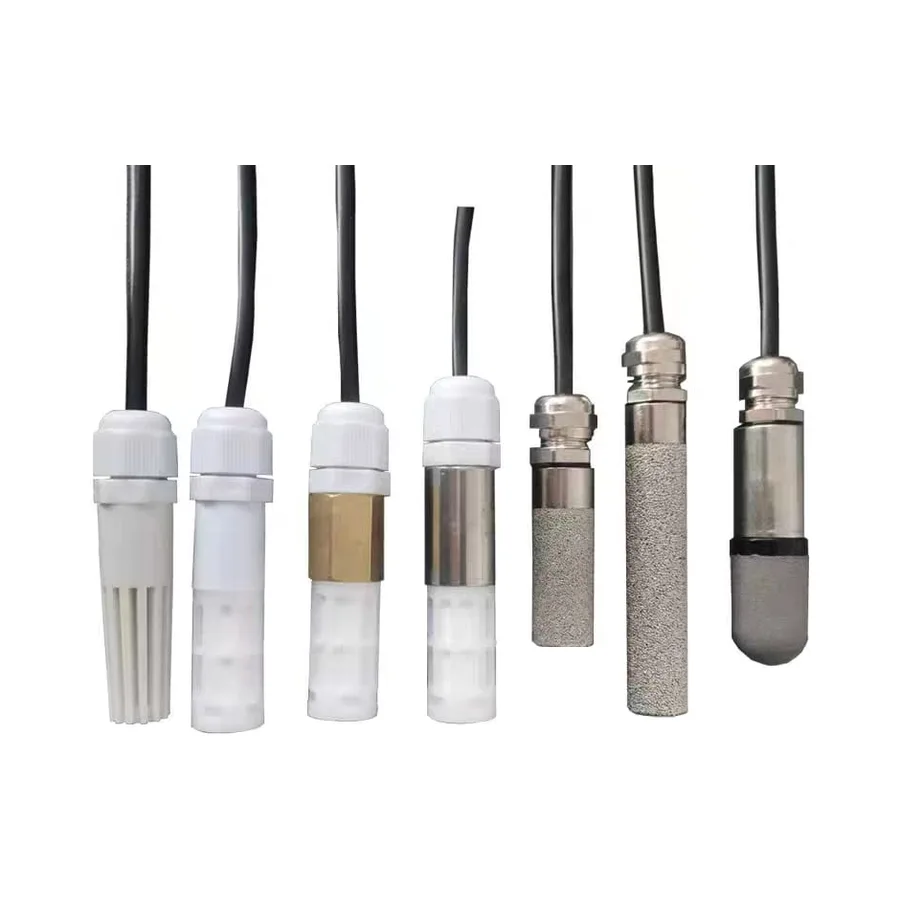
THS-100
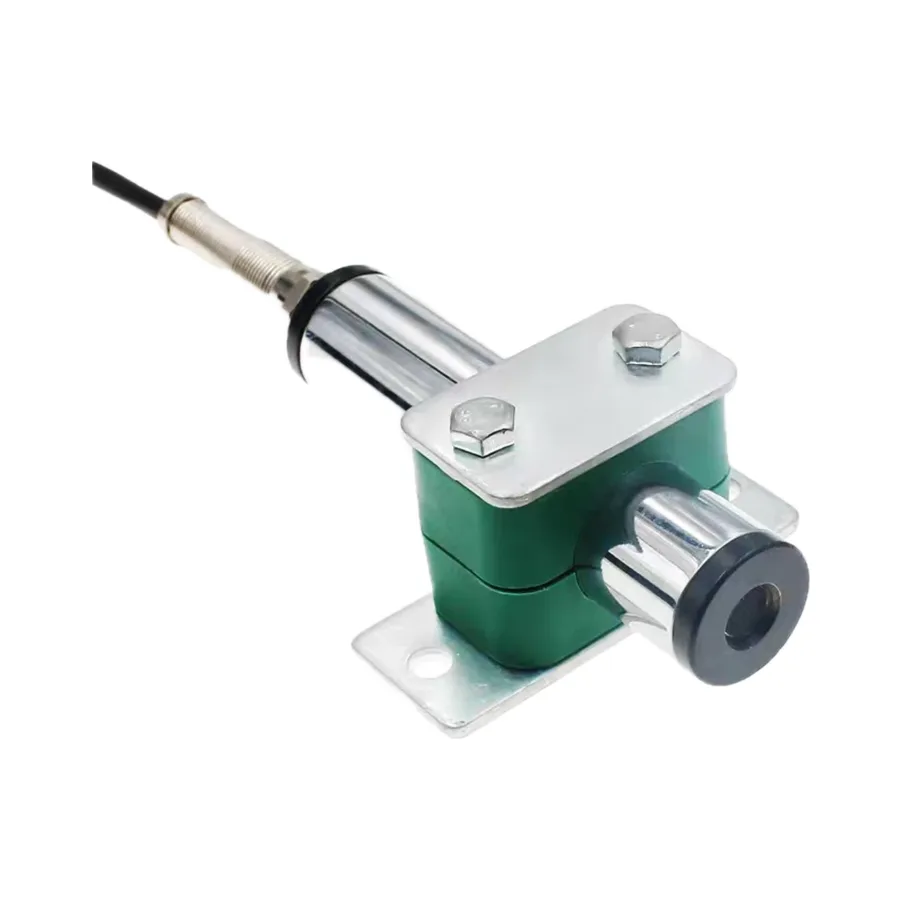
SKU: NS-200
Measures the noise level in the house from 30 to 130 dB.
The NS-200 is a noise level sensor. It measures how loud the house is and gives the result in decibels, across a range from 30 to 130 dB. The low end of that range is a very quiet room and the high end is far louder than any fan bank, so the sensor has room for everything a poultry house produces, from a dark house at night to a full row of tunnel fans.
The sensor has a stainless steel body and is fixed to a pipe in the house with a clamp. It is a level meter. It gives one figure for the sound in the house at each moment, and the worth of that figure lies in how it changes over the day and from one day to the next.
Every poultry house has a sound of its own. An experienced stockman opens the door and knows within seconds whether the house is as it should be, largely by ear. The fans give a steady base level that steps up and down with the ventilation stages. The feed lines add a rattle each time the augers run. The birds add their own layer: a flock is loud at lights-on and at feeding and settles to a murmur in the dark.
Put together, these give each house a usual noise level for each hour of the day. The pattern repeats closely from one day to the next, and it shifts slowly as the birds grow and as the season changes the fan settings. A sensor that records the level around the clock turns that pattern into a curve. Once the curve of a normal day is known, a day that departs from it stands out.
The most serious change in a poultry house is often a silence. Fans that stop on a warm night leave a full house without air, and the first sign from outside is that the hum has gone. A tripped breaker, a failed fan belt, a fault in the climate computer or a power cut with a generator that did not start all sound the same: the level falls to that of the birds alone.
A noise sensor sees that drop the moment it happens. It works independently of the fan wiring and the climate computer, because it listens to the result and takes no signal from the equipment. On farms that already have a power alarm and a temperature alarm it adds a third, separate check on the one thing that matters most at night, which is that the fans are turning.
The same applies in smaller ways during the day. A feed line that normally runs for a few minutes and is heard running for half an hour may be running empty after a bridged silo or a broken auger. A ventilation stage that should have come in during the afternoon and did not leaves the level lower than on the day before.
The opposite change tells its own story. A resting flock is quiet, and a sharp rise in the level during the dark period means that something has disturbed the house. The cause may be a predator or a stray animal at the wall, a person who should not be on the site, a bang from a loose panel in the wind, or a piece of equipment that has started to fail noisily.
In layer and breeder houses a fright in the dark can end in birds piling into a corner, and in any flock repeated disturbance at night costs rest. The sensor gives the time and the size of the event, and a manager who sees the same spike at the same hour on three nights has something definite to go and look for.
There is no single figure, and the houses on one farm will differ from each other. The level depends on the number and type of fans, on the feeding and egg collection equipment, on the building and on the birds. The useful reference is the house itself.
For that reason the limits are set by the user, after the sensor has run for a week or two and the normal curve is known. Two limits cover most needs: a lower one that the house should never fall below while the fans are meant to run, and an upper one that it should not pass during the dark period.
A noise record is also of use to the farm as an employer. Fan ends, feed mills, egg packing lines and houses full of adult birds are loud places to work, and many countries set limits on the noise a worker may be exposed to over a working day. The sensor shows how loud a house is at the hours when staff are inside, and how that changes with the ventilation stage and the season. That is a sound basis for deciding where hearing protection is worn and for showing an inspector how the decision was made.
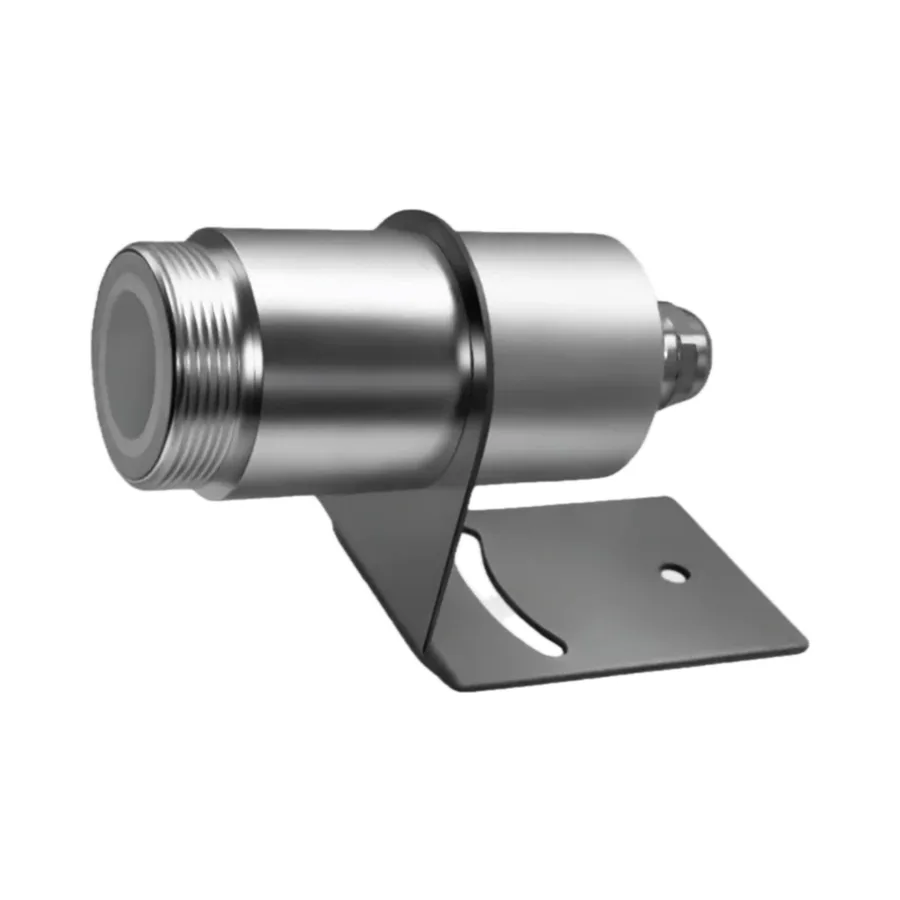
The sensor is clamped to a pipe, which makes it easy to fit on the suspension pipes, conduits or frame tubes that every house already has. The cable joins it at a screw connector, so it can be unplugged and taken down while the cable stays in place.
The aim is to hear the house as a whole. A position in the central part of the house, away from the nearest fan and from the feed hopper drive, gives a level in which all the sources take part. Directly beside one fan the sensor hears little else. Mount it above the reach of the birds and clear of drinker lines that are winched up and down, and keep it out of the spray of foggers.
In a long tunnel-ventilated house the fan end is much louder than the inlet end. One sensor in the middle suits most houses. Farms that want to tell a fault at the fan end from a fault at the feed end fit one towards each end.
In a poultry house the thing that spoils a noise reading is dust on the sound opening. Wipe the body and clear the opening when the house is cleaned between flocks, and unplug the sensor or cover it before wash-down.
Check the reading now and then against a handheld sound level meter held at the same spot. The simplest test needs no instrument: switch a fan group on and off and see the level step up and down. Tell us the length of the house, the ventilation system and what you most want to be warned about, and we will suggest how many sensors to fit and where to clamp them.
The sensor fixes to a pipe in the house with its clamp, and the cable joins it at a screw connector. It wires to the Genesis controller over RS485.
The noise level in the house, in decibels, from 30 to 130 dB.
On a pipe, with a pipe clamp. The body is stainless steel and the cable connects with a screw connector.
It shows the usual level of the house with its equipment running, and the hour at which that level changed.
THS-100
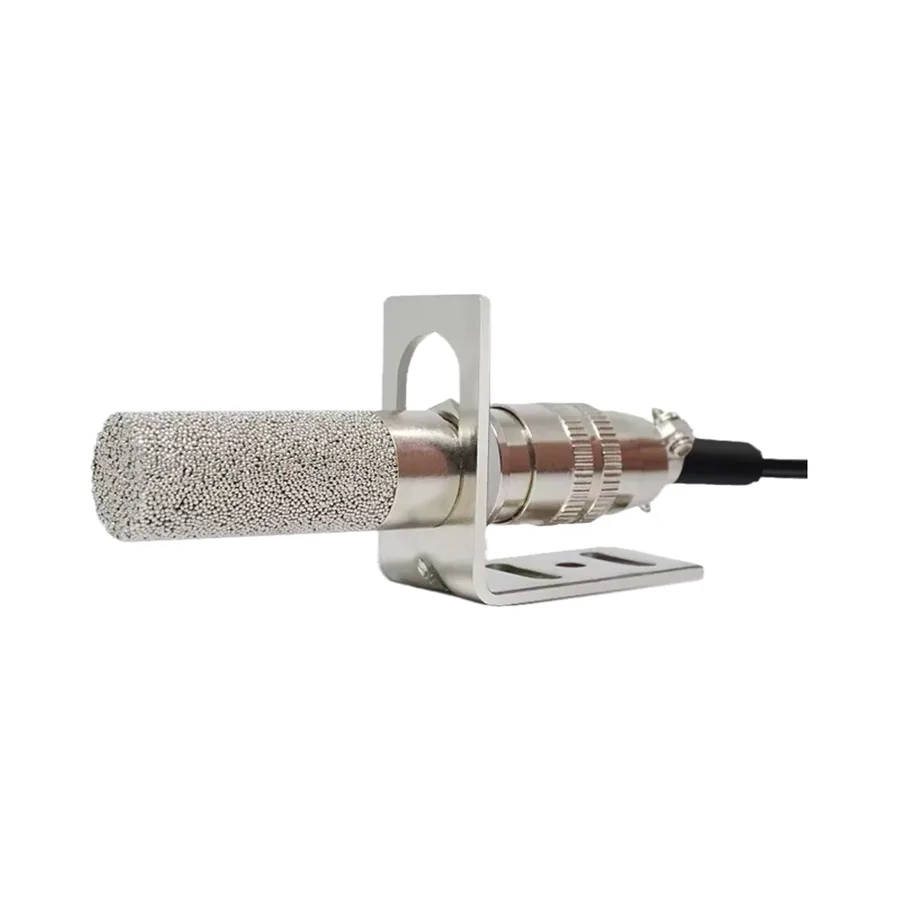
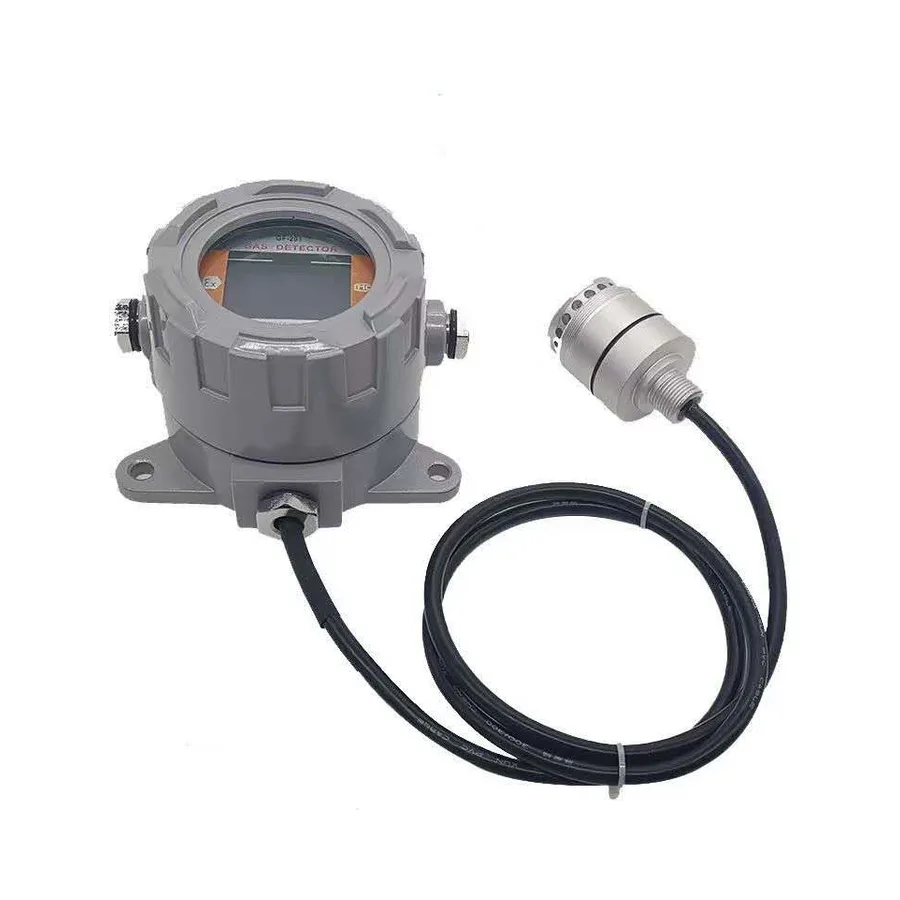
GF-201-NH3
NH3-210
Send the number of houses, the birds and what you want to watch. You get a proposed set of sensors per house and a quote, with the datasheets.