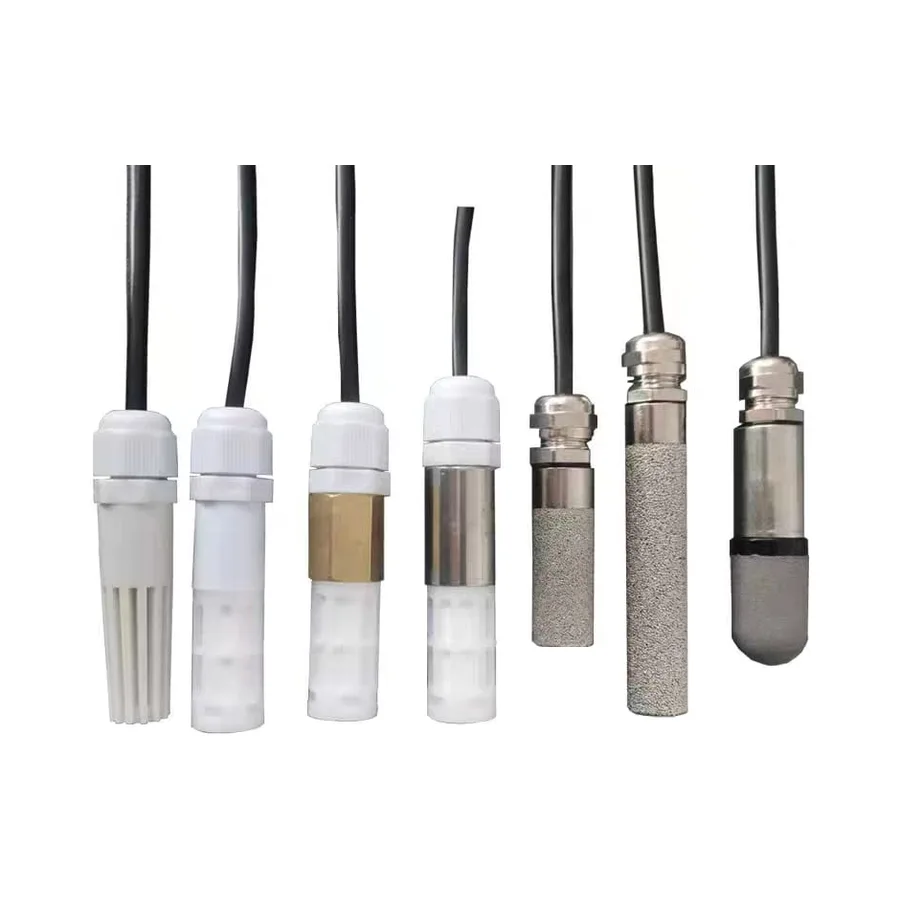
THS-100
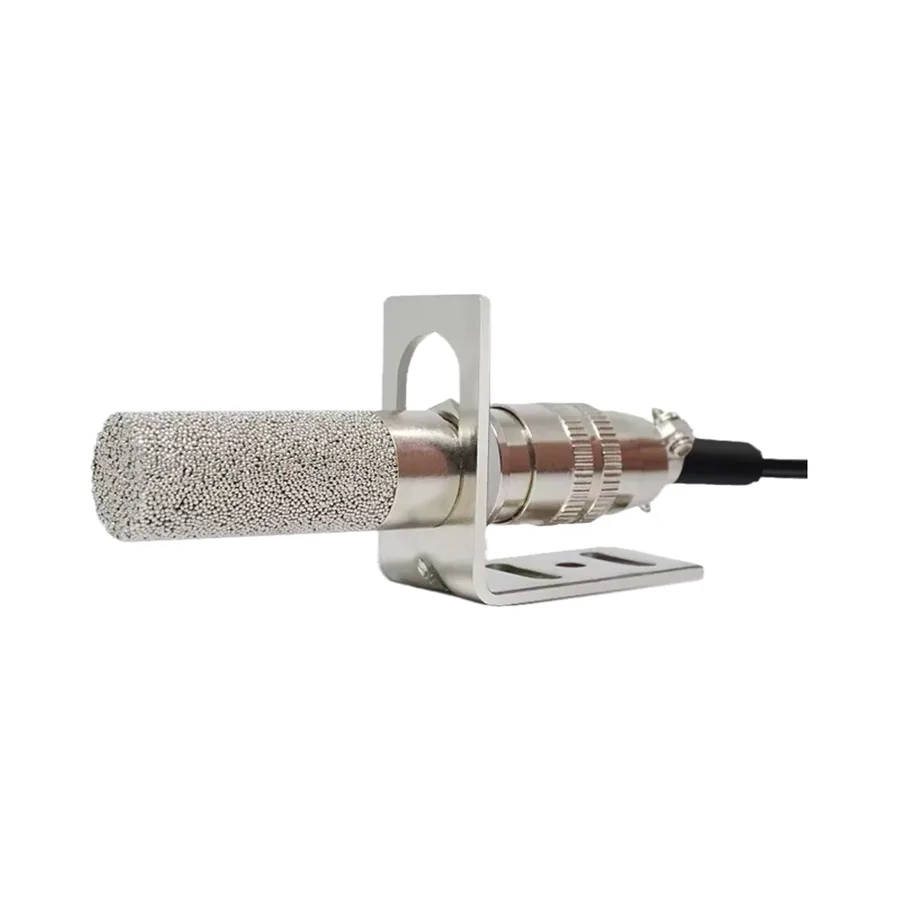
SKU: THS-200
Temperature and humidity probe with a sintered stainless steel filter for dusty and wet poultry houses.
The THS-200 is a temperature and humidity probe made for the bird area of a poultry house. The sensing element sits behind a sintered stainless steel filter, the probe is held by its own mounting bracket, and the cable locks onto it with a screw-lock connector. It measures temperature from -30 to 80 °C together with the humidity of the same air.
It comes in a single build, so there is nothing to select before ordering. The probe that arrives is the one meant for a house with litter, feed dust, foggers and cooling pads.
The air in a broiler house carries litter particles, feed dust, dander and feather fragments, and the load grows as the birds grow. In the last weeks of a flock a fine grey layer settles on every surface within days. A humidity element left open to this air is soon coated. The coating holds moisture, so the reading lags behind the air and then stays high after the house has dried.
Water is the second problem. Foggers, a cooling pad running at full flow and the wet air of a winter morning all put moisture on anything that hangs in the house.
A sintered filter is a cap of metal powder fused into a rigid, porous wall. Air and water vapour pass through the pores, while dust and droplets stay on the outside. The element behind it measures the house air and stays clean. Stainless steel suits the job because the air in a poultry house is corrosive as well as dusty, and because a steel cap can be brushed clean again and again.
In cold weather the grower holds ventilation down to save heat, and the moisture the birds breathe out and drop into the litter stays in the house. Humidity climbs, the litter stops drying and begins to cake, and wet litter is where ammonia and foot pad lesions start.
Humidity is the early sign. It rises hours or days before the litter feels wet under a boot, so a probe that tracks it through the night tells the grower when the minimum ventilation rate has fallen behind the flock. EU Council Directive 2007/43/EC uses this measurement in its rules for houses stocked at the higher densities: when the outside temperature is below 10 °C, the average relative humidity inside the house over 48 hours must not exceed 70%.
The temperature half of the reading shows what the extra ventilation costs. When the fans run longer, the grower sees how far the house temperature falls and how soon the heaters bring it back.
A bird has no sweat glands. In hot weather it sheds heat by panting, which works by evaporating water from the airways. The wetter the air, the less water evaporates and the less heat the bird loses. The same house temperature is therefore harder on the flock on a humid day than on a dry one, and a thermometer alone does not show the difference.
This matters most where evaporative cooling is used. The pad lowers the air temperature by adding water to the air. On a dry afternoon that trade is a good one. Late in the evening, or after rain, the outside air is already humid, the pad adds more, and the birds may be worse off than with the pump switched off and the fans at full speed.
With temperature and humidity taken at the same point over the birds, the grower can see both sides of the trade at each hour of a heat wave and decide when to run the pad. The same directive sets a temperature rule for the densely stocked house: when the outside temperature in the shade is above 30 °C, the inside temperature must not exceed it by more than 3 °C.
The dust in a layer house comes from feed, feathers and dried manure, and in aviary and floor systems the birds keep it in the air all day. A flock stays for many months, so a probe in a layer house works much longer between clean-outs than one in a broiler house. A filter that can be brushed in place suits that rhythm.
Breeder houses combine litter, slats and long flocks, with a feed programme that depends on the birds staying in their comfort range. Warm, humid nights also show in the nests and in the egg room, so the house reading is worth watching through the laying period.
In a hatchery the wet areas are the wash rooms and the halls that are cleaned down after every hatch. A probe with a stainless filter is at home in rooms where the air is often damp.
The bracket fixes the probe to a post, a wall or a suspension line. Choose a point in the air the birds live in, with air moving freely around the filter. Keep it out of direct sun from an open inlet or curtain, away from the heat of a brooder or heater, and out of the cold jet of an air inlet. Keep it clear of the spray of a fogger nozzle too, so that it measures the air and not the mist.
The cable attaches with the screw-lock connector. The threaded collar holds against the pull of a cable that birds, workers or a swinging feeder line may catch. It also means the probe can be taken off its cable and put back the same way.
Care is simple. When the filter shows a coat of dust, brush it off with a dry, soft brush. A filter that is clogged still gives a reading, but it follows the house slowly, so a probe that lags behind a handheld meter is asking for a cleaning. Compare the probe with a reference thermometer and hygrometer at each clean-out, holding the reference beside the filter.
Choose the THS-200 for the bird area of a dusty or wet house when you want a probe that is ready to hang: one build, with the stainless filter, the bracket and the locking connector included. Choose the THS-100 when the measuring point calls for a particular housing, such as its vented cap for a dry egg room or its IP67 housing for an area that is washed down. The THS-100 is offered in seven housings and its temperature range starts lower, at -40 °C.
For the number of probes, count the places where the climate can differ. One probe serves a short house. A long tunnel-ventilated house warms up along its length, so one probe near the inlet end and one near the fan end show the spread across the flock. Houses that brood in one section and later open the full length are served by a probe in each section. Tell us the length of the house, the ventilation type and the bird type, and we will suggest the number and the positions.
The probe fixes in the house with its mounting bracket, and the cable attaches with the screw-lock connector. It wires to the Genesis controller over RS485 Modbus.
The THS-200 has a sintered stainless steel filter and is made for dusty and wet poultry houses. It measures temperature from -30 to 80 °C along with humidity.
The THS-200 comes in one build: a sintered stainless steel filter, a screw-lock connector and a mounting bracket. The THS-100 is a probe offered in seven housings.
It wires to a Genesis controller over RS485 Modbus. The controller sends the readings to Henlytics, where you set the limits for phone alerts.
THS-100
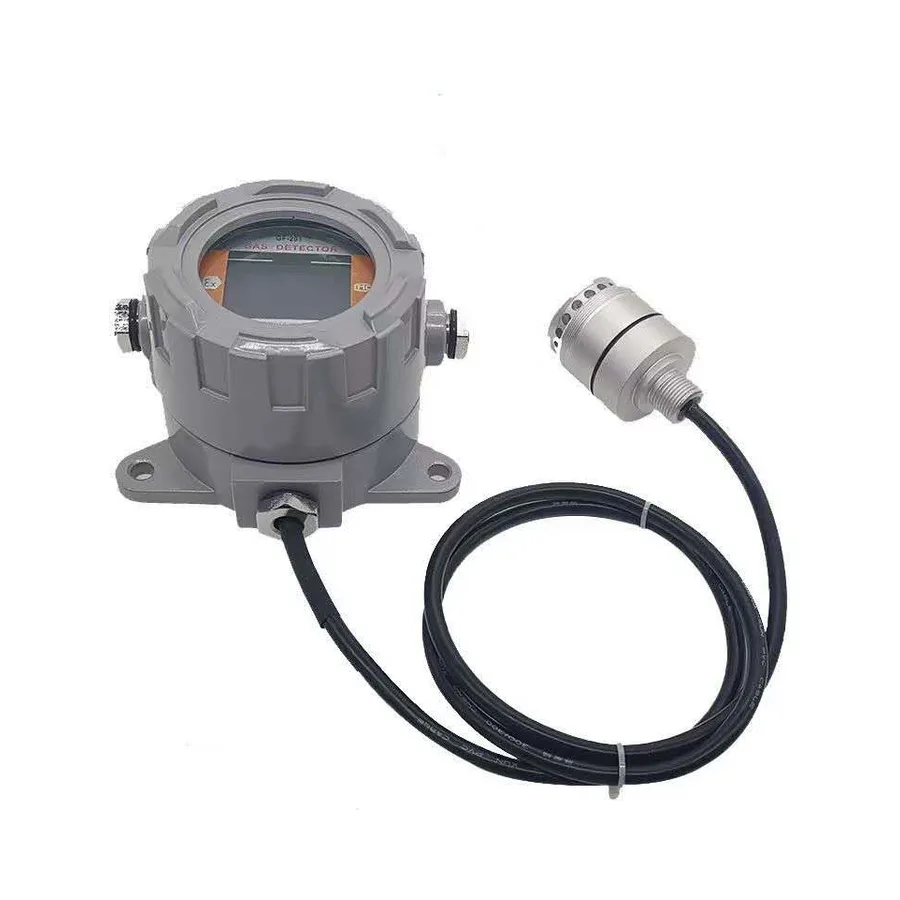
GF-201-NH3
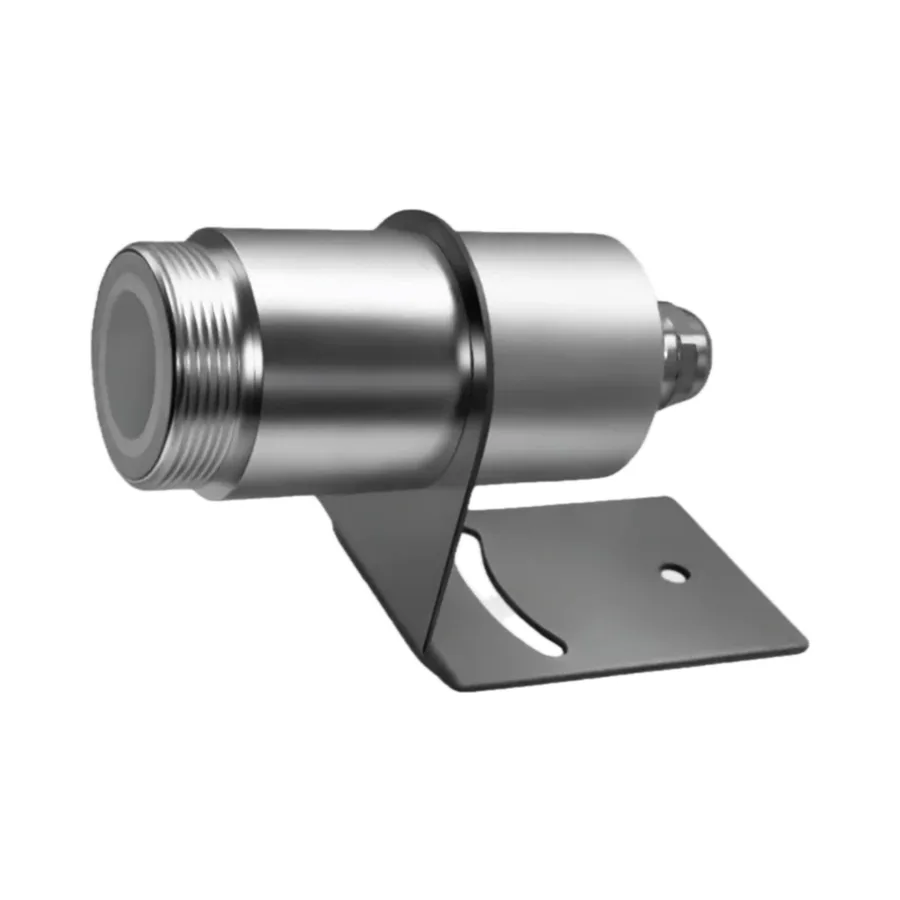
NH3-210
GF-201-CO2
Send the number of houses, the birds and what you want to watch. You get a proposed set of sensors per house and a quote, with the datasheets.