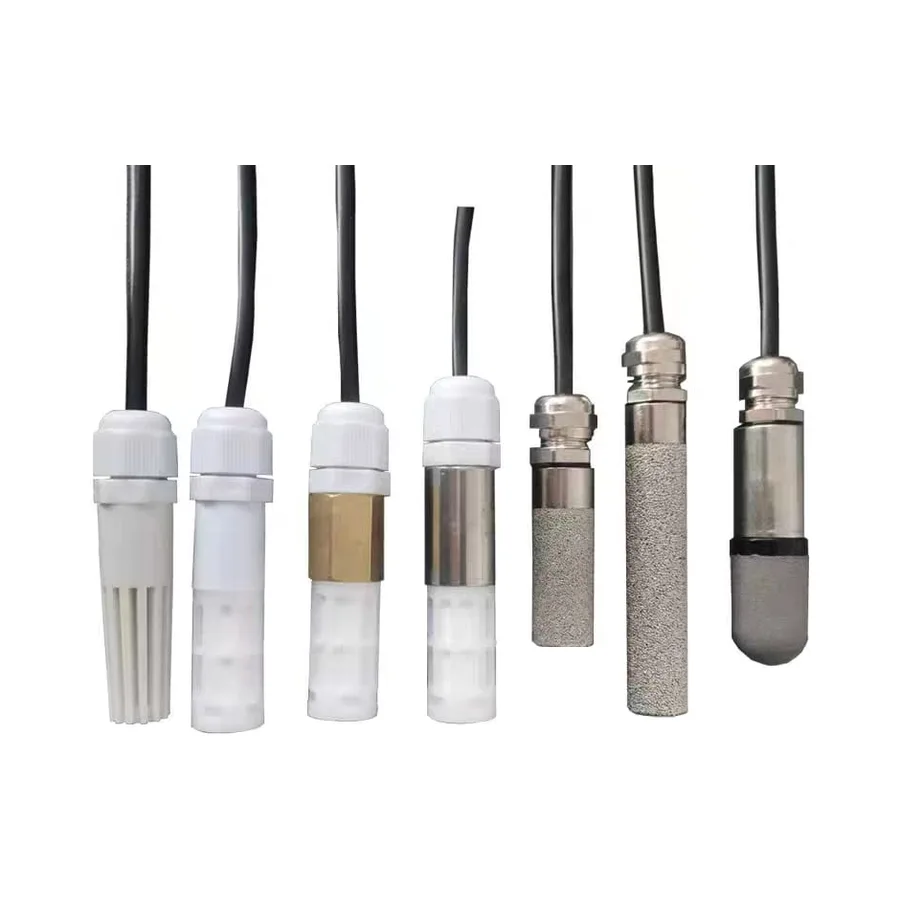
THS-100
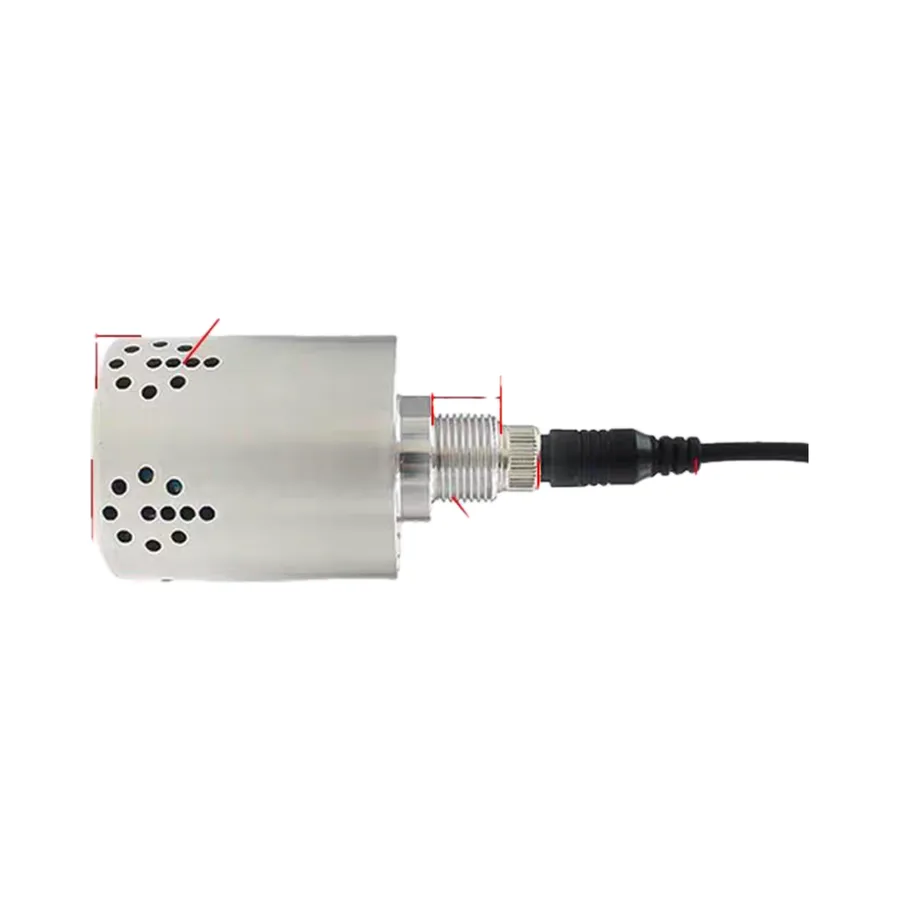
SKU: PM-200
Laser sensor that measures the PM2.5 and PM10 dust in the air of the house.
The PM-200 measures the dust that hangs in the air of a poultry house. It reports two values, PM2.5 and PM10, which are the standard way of describing airborne particles by size. PM10 covers particles up to 10 micrometres across, the dust that is breathed in and caught in the nose, throat and upper airways. PM2.5 covers the finer part, up to 2.5 micrometres, which stays in the air longer and travels deeper into the lungs.
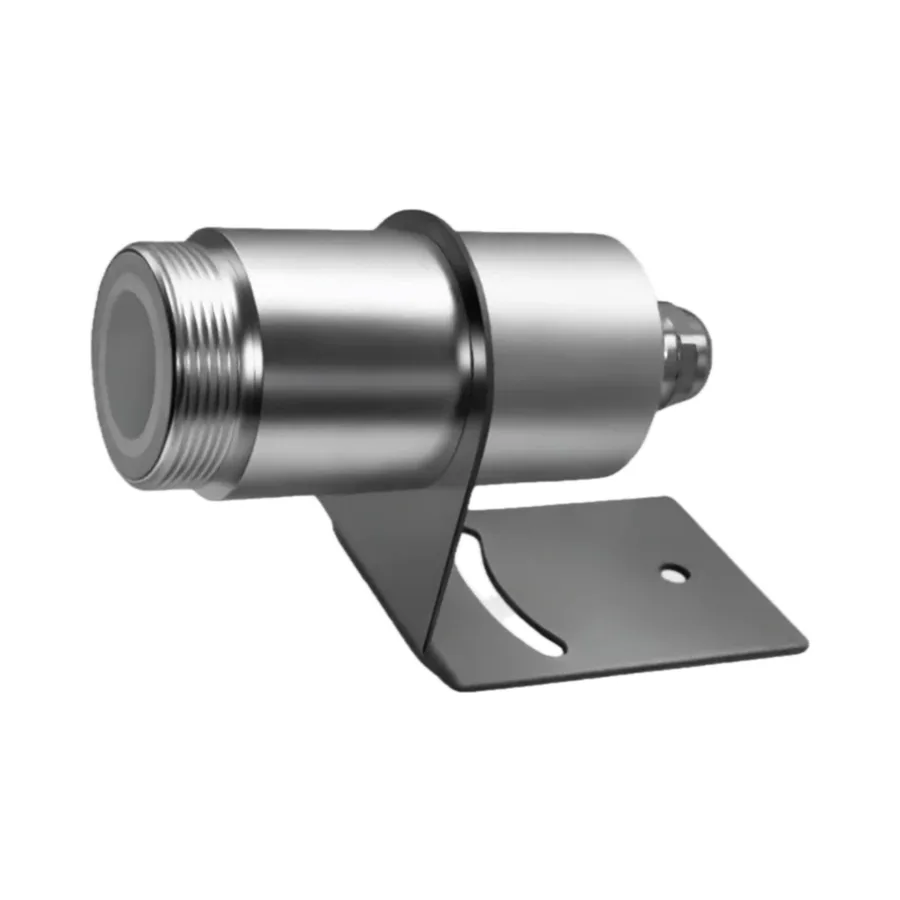
The measurement is optical. Air from the house passes through a small chamber in which a laser beam shines. Each particle that crosses the beam scatters a flash of light onto a detector, and from the number and strength of the flashes the sensor works out how much dust of each size the air is carrying. The sensing parts sit in a stainless steel housing, 54 × 127 mm, with an M20×1.5 thread for mounting.
Poultry dust is a mixture. Dried litter and manure make up a large part, together with feed fines, skin scales and broken-down feathers. It is lifted into the air by the birds themselves when they walk, scratch, dust-bathe and flap, and by the feed lines, the fans and the people working in the house.
Dust on the lamp covers is a nuisance, and dust in the airways is a health matter. Particles carry bacteria, moulds and ammonia with them into the airways of the birds, and an airway that is irritated all day is easier for respiratory disease to enter. The people who work in the house breathe the same air for hours at a time. A stockman can see a haze in a beam of light, but the eye cannot tell a moderate day from a bad one, and the fine fraction is invisible.
A broiler house changes from week to week, and the dust follows a pattern most growers will know.
In the first days the litter is fresh, the house is warm and the minimum ventilation is low. Dust from new shavings or chopped straw is stirred each time the feed pans fill. In the middle of the flock the litter takes up moisture and the air is often at its cleanest. Late in the flock the picture depends on the litter. Where it stays dry and friable under heavy birds, every movement of the flock raises dust, and the level climbs at lights-on, at feeding and whenever someone walks the house.
The season matters as well. In cold weather the fans run at minimum rates and the dust that is raised stays in the house. In hot weather the tunnel fans clear it quickly, and the reading usually drops once the house goes into tunnel mode.
With a sensor in the house these swings appear as a daily curve. The grower can see at which hours the peaks come and how high they are compared with last week or with the previous flock at the same age, and can judge what a change in litter material, a top-up of bedding or a different minimum ventilation setting did to the air.
Layer houses with a litter area are among the dustiest buildings on a farm. Hens are active birds. They scratch and dust-bathe for much of the day, and in an aviary they fly between the tiers and the floor, which keeps the litter dust in suspension. The litter in such a house is in use for a whole laying period and becomes finer and drier as the months pass.
The dust level in a layer house follows the light programme closely. It rises soon after lights-on, stays high while the hens use the litter, and settles in the dark period. Staff collect floor eggs, walk the system and service the belts during the dusty hours, so the reading at those times describes the air they work in. It also gives the manager a way to judge the measures taken against dust, such as removing part of the litter, changing the hours at which the hens have access to it, or adjusting ventilation rates.
The two values answer slightly different questions. PM10 follows the coarse dust that activity throws up, and it reacts sharply to feeding, lights-on and people in the house. PM2.5 follows the fine dust that stays in the air between those events and that the ventilation has to remove. A house where PM10 peaks and falls back quickly has a dust source that is tied to activity. A house where PM2.5 stays raised through the day is short of air exchange for the dust it produces.
The housing has an M20×1.5 thread, the same size as a common cable gland, so it fits a standard hole in a bracket, a panel or an enclosure wall. The cable joins the sensor at a screw connector, which lets the sensor be unplugged and taken down without disturbing the cable run.
Choose a position in the general air of the house, in the zone the birds occupy, where the air that reaches the sensor has mixed. A spot directly under a feed hopper or beside a fan shows only that piece of equipment, and a spot in the stream of an air inlet shows outside air. Keep the sensor out of reach of the birds and away from the spray of foggers and cooling pads, because water droplets are counted by an optical sensor in the same way as dust.
In a long house the two ends can differ a good deal, with cleaner air at the inlet end and the dust of the whole house passing the fan end. A sensor near the middle gives a fair single figure. Two sensors show the gradient.
A dust sensor works in the material it measures, and that material settles on it. The routine is simple. Brush or wipe the outside of the housing when you pass, and keep the air openings free of dust mats and cobwebs. If the readings sink slowly over several weeks while the house looks as dusty as ever, a blocked opening is the first thing to check.
Unplug the sensor at its screw connector and take it out of the house before wash-down and disinfection, then refit it when the house is dry and before the litter is spread, so that the record of the next flock starts on the first day. A handheld particle counter held beside the sensor is a quick way to confirm that it still follows the dust in the house.
Most farms start with one sensor in each house they want to follow, and add a second in long houses or in aviary houses with separate sections. Tell us the house type, its length and the litter you use, and we will suggest the number of sensors and their positions.
The housing is 54 × 127 mm with an M20×1.5 thread, and the cable joins it at a screw connector. It wires to the Genesis controller over RS485.
They are the airborne particles up to 2.5 and up to 10 micrometres across. The PM-200 measures both with a laser.
Broiler houses and layer houses, where litter, feed and feathers put dust into the air.
The sensor wires over RS485 to the Genesis controller of the house, which sends the readings to Henlytics. Above the limit you set, a phone alert is sent and repeated until acknowledged.
THS-100
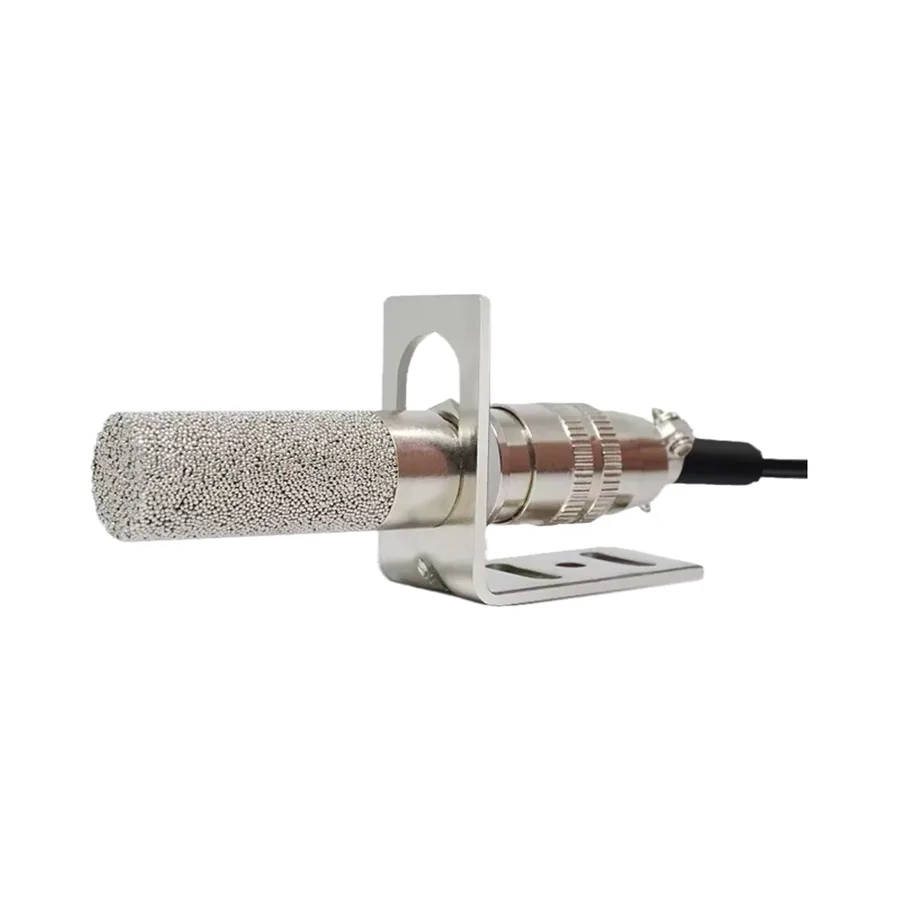
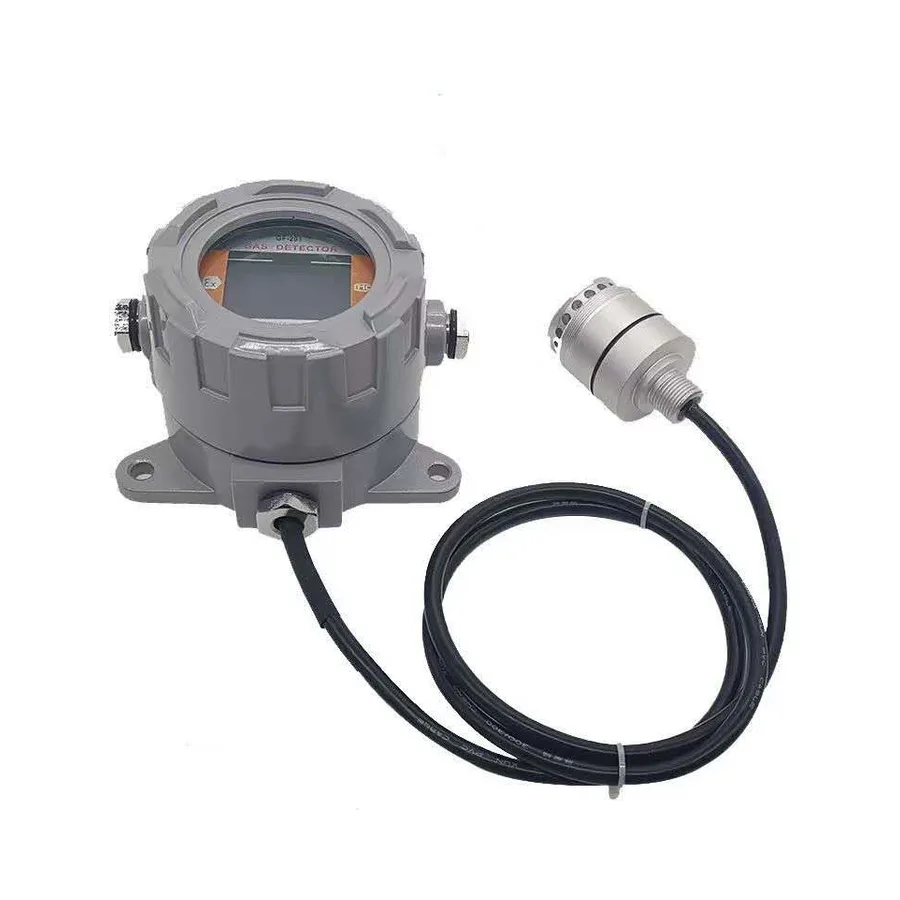
GF-201-NH3
NH3-210
Send the number of houses, the birds and what you want to watch. You get a proposed set of sensors per house and a quote, with the datasheets.