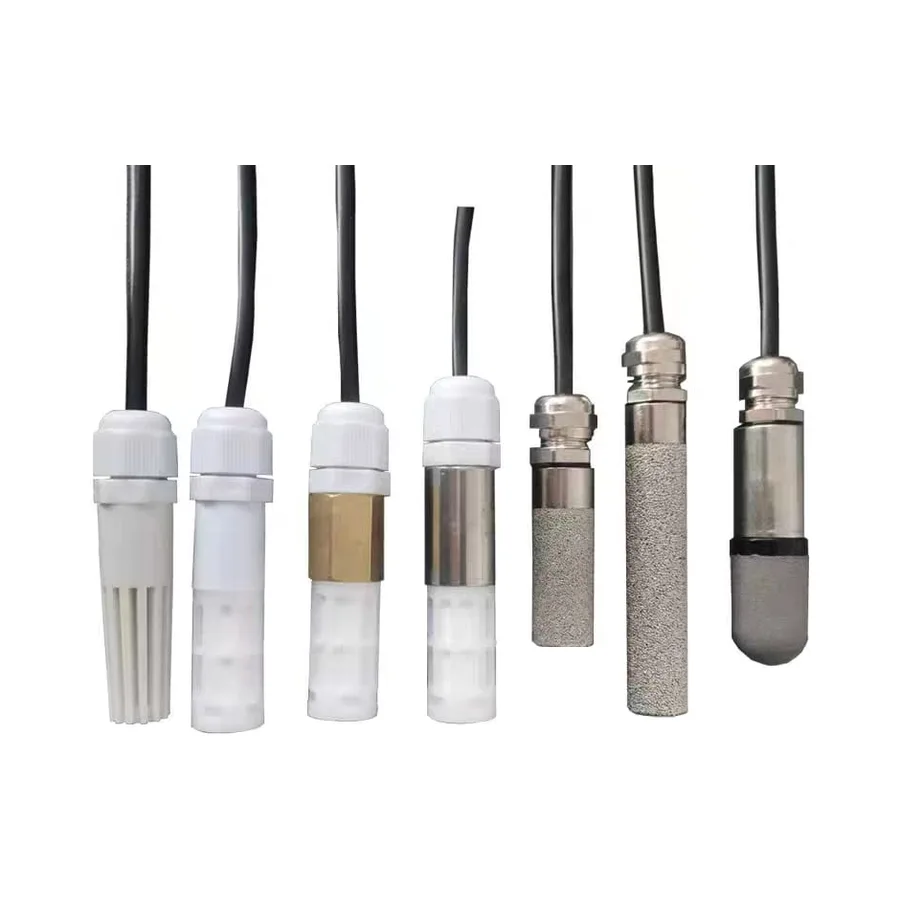
THS-100
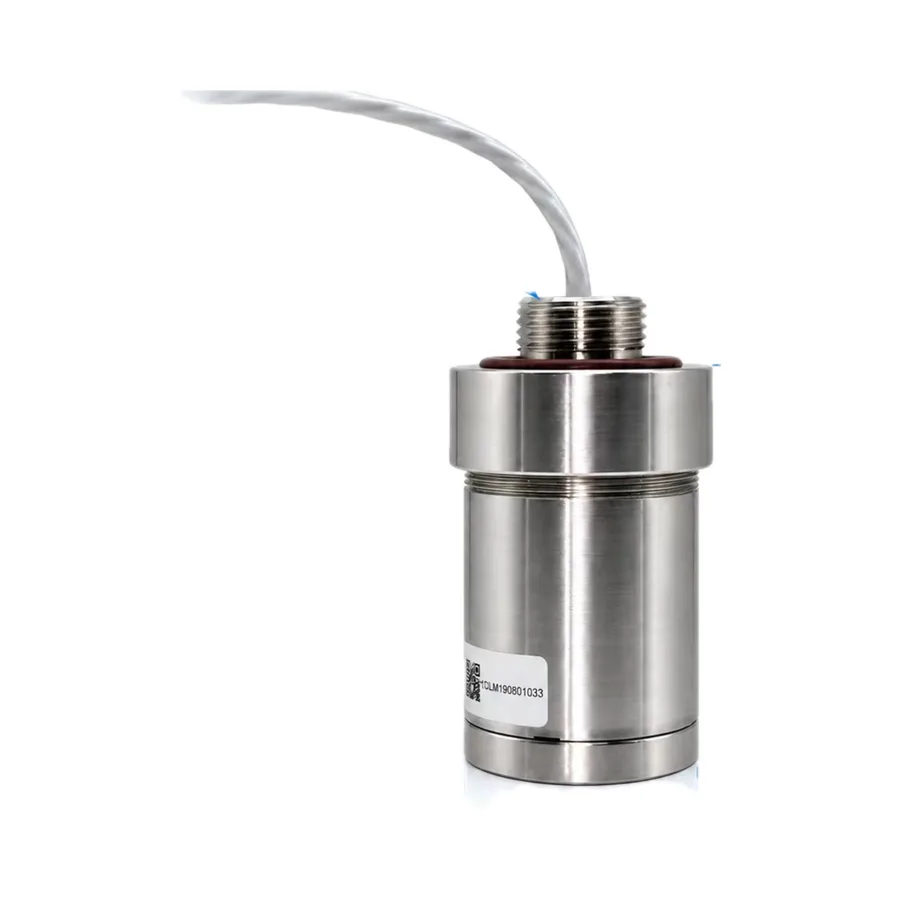
SKU: CH4-210
Compact combustible gas sensor for leaks at heaters and gas lines, in a threaded stainless steel head.
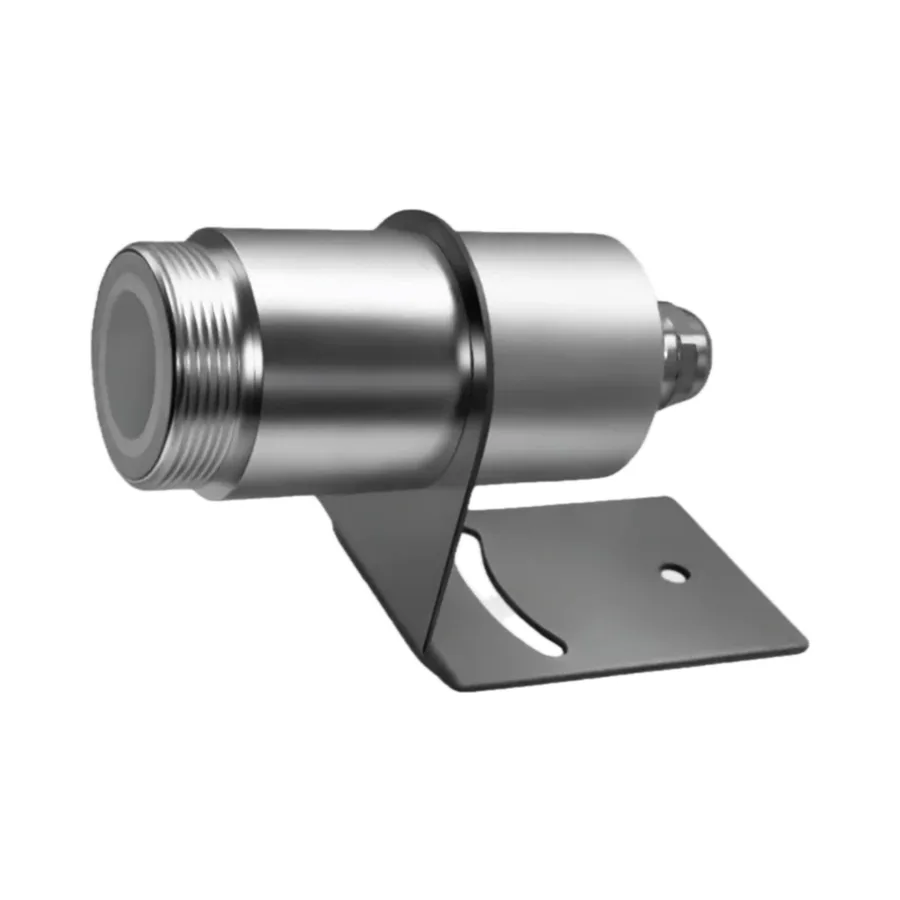
The CH4-210 is a compact sensor for combustible gas. It is made for one job in a poultry house: finding a gas leak at the heaters and along the gas line. The sensing element sits in a stainless steel head that measures 35 × 68 mm, and the head has an M20×1.5 thread by which it is mounted.
The small size is the point of the design. A leak is easiest to find close to where it starts, before the gas has spread into the volume of the house and been thinned by the air. A head this small can be fixed near a group of heaters or beside the regulators on the gas line, in places where a boxed instrument would be in the way of the winches, the feed lines and the people working in the house.
Few buildings treat gas equipment as roughly as a poultry house does. The air is warm, humid and laden with ammonia, and it attacks brass and steel fittings from the first flock onward. Dust settles in burners and on valves. Several times a year the whole house is soaked with a pressure washer and then with disinfectant.
The equipment is also moved far more than gas equipment elsewhere. Brooders hang on winches and go up and down with the age of the birds. Flexible hoses bend at the same point each time. At clean-out the heaters are lifted, disconnected or swung aside, and they are reconnected a few days later, often in a hurry because the chicks are booked. Every remade joint is a new chance for a leak. Mice and rats add their share by gnawing hoses in the empty house.
All of this is the normal working life of a poultry house, and it is the reason a heated house is worth watching for gas all the time.
Gas use in a broiler house is concentrated at the start of the flock. Before the chicks arrive the heaters are lit and run hard to warm the floor and the litter. The house is closed, the ventilation is off or at its lowest, and for long stretches nobody is inside. If a joint that was remade at clean-out is going to leak, this is when it starts.
Brooding week continues the same conditions with chicks on the floor. The heaters cycle through the night, and the minimum ventilation moves little air. Gas from a small leak is not carried out as it would be in summer with the fans running. It collects. A sensor at the heaters is measuring through those nights, and a rising reading gives the grower a reason to go to the house while the leak is still a smell at one fitting.
Breeder farms have a longer version of the same pattern. Rearing houses are brooded like broiler houses, and in cold regions production houses are heated through the winter. The heating runs for months, and the fittings have the same ammonia and the same wash-down to cope with.
The answer follows the gas line. Walk the line from the point where the supply enters the building to the last heater, and note every place where gas could escape and gather: the entry point with its main valve and regulator, each branch, and each group of heaters. A compact sensor covers the area around it, so the houses that are covered best are the ones where a sensor sits near each of those places.
The layout of the house matters as well. A service room is a small closed space, and a leak there builds up faster than in the open house, so it deserves a sensor of its own. In the house, heaters spaced along the full length are a different case from heaters grouped in a brooding section at one end.
The head mounts by its M20×1.5 thread at the heaters or on the gas line. M20×1.5 is the common thread of cable entries on junction boxes and brackets, which makes a fixing point easy to find or to make. The stainless steel body stands up to the corrosive air of the house and to cleaning.
The height of the sensor depends on the fuel. A gas that is lighter than air rises from a leak and gathers under the ceiling, and the sensor goes above the fittings it is watching. A gas that is heavier than air does the opposite. It flows downward and spreads along the floor, and the sensor goes below the fittings. Getting this wrong puts the sensor where the gas does not go, which is why the fuel is confirmed with every quote before a position is given.
Keep the head out of the hot exhaust of the heater and out of the direct stream of a fan or an inlet. Moving air thins the gas at that spot and delays the reading. Leave the sensing end open to the air, and do not paint over it or wrap it when other work is done in the house.
A leak sensor spends nearly all of its life reading nothing, and it is easy to forget. Build its check into the turnaround routine, at the same time as the leak test of the gas line before the heaters are lit.
During wash-down, cover the head so that the pressure washer does not drive water and dirt into the sensing end. Afterwards, uncover it, brush off any dust, and look at the cable and the thread for damage. Then prove that it responds. Your gas installer can apply a test gas to the head and confirm the reading rises and falls back. A sensor that has been proven before placement is one less thing to wonder about on the first cold night of the flock.
Agree as well what happens when the reading rises. The usual steps are to close the main gas valve outside the house, ventilate, keep ignition sources away, and have a qualified gas fitter repair the leak before the heaters are relit.
The CH4-210 is the choice for points close to the equipment in broiler and breeder houses. Its small threaded head fits at a group of brooders or on the gas line, and several of them can follow the line through a house.
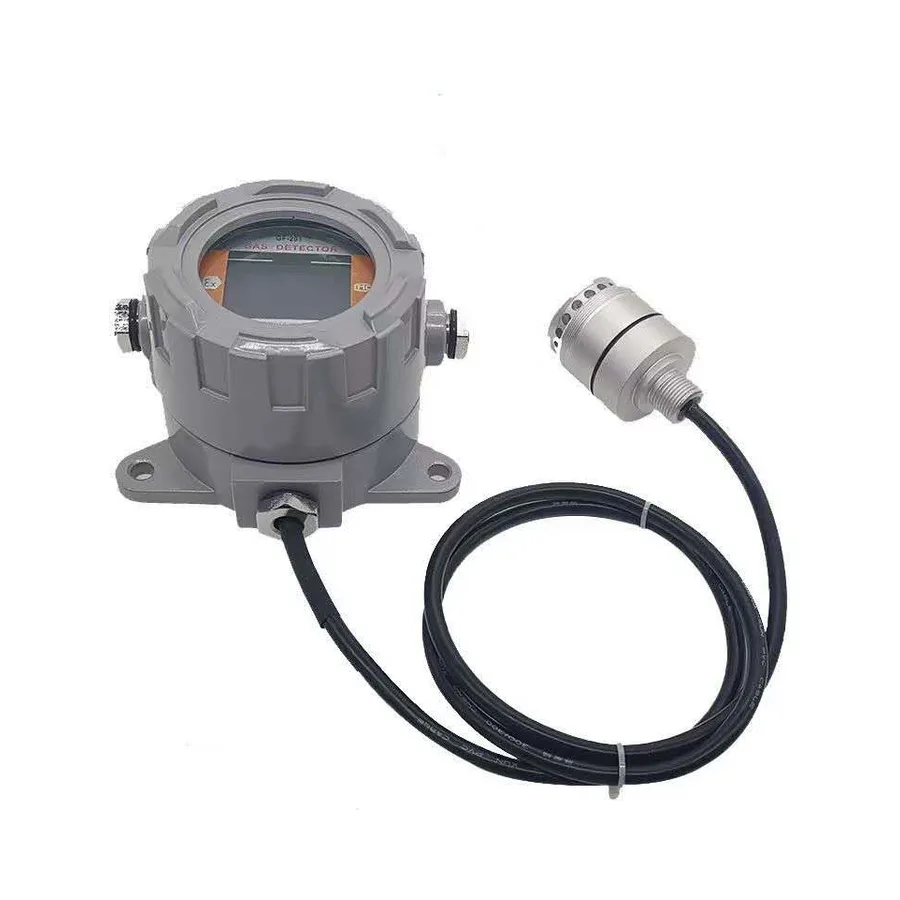
The GF-201-CH4 is a wall-mounted detector in a flameproof enclosure, with a backlit display, a 0-100 %LEL scale and two alarm relays for a siren or a light. It suits a service room or a house where the gas level should be shown on the wall and the alarm should be switched by the detector itself.
When you ask for a quote, tell us which fuel the heaters burn, how many heaters there are and how the gas line runs. We will confirm the sensor for that fuel and suggest how many points to fit and at what height.
The head mounts by its M20×1.5 thread at the heaters or the gas line. It wires to the Genesis controller over RS485 Modbus.
It is a combustible gas sensor for leaks at heaters and gas lines. The fuel used in your house is confirmed with the quote.
The stainless steel head measures 35 × 68 mm and mounts by an M20×1.5 thread. It wires to the Genesis controller over RS485 Modbus.
Henlytics sends a phone alert when the reading crosses the limit and repeats it until someone acknowledges it. The reading is also kept in the history of that house.
THS-100
GF-201-NH3
NH3-210
Send the number of houses, the birds and what you want to watch. You get a proposed set of sensors per house and a quote, with the datasheets.