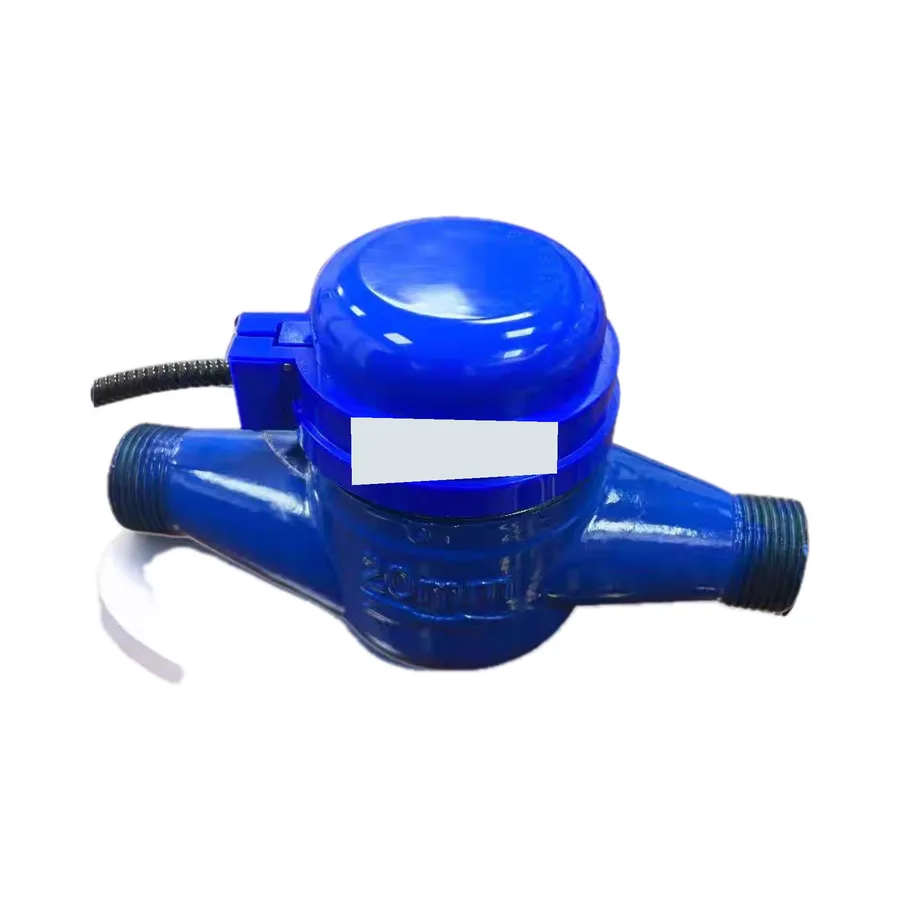
WM-20
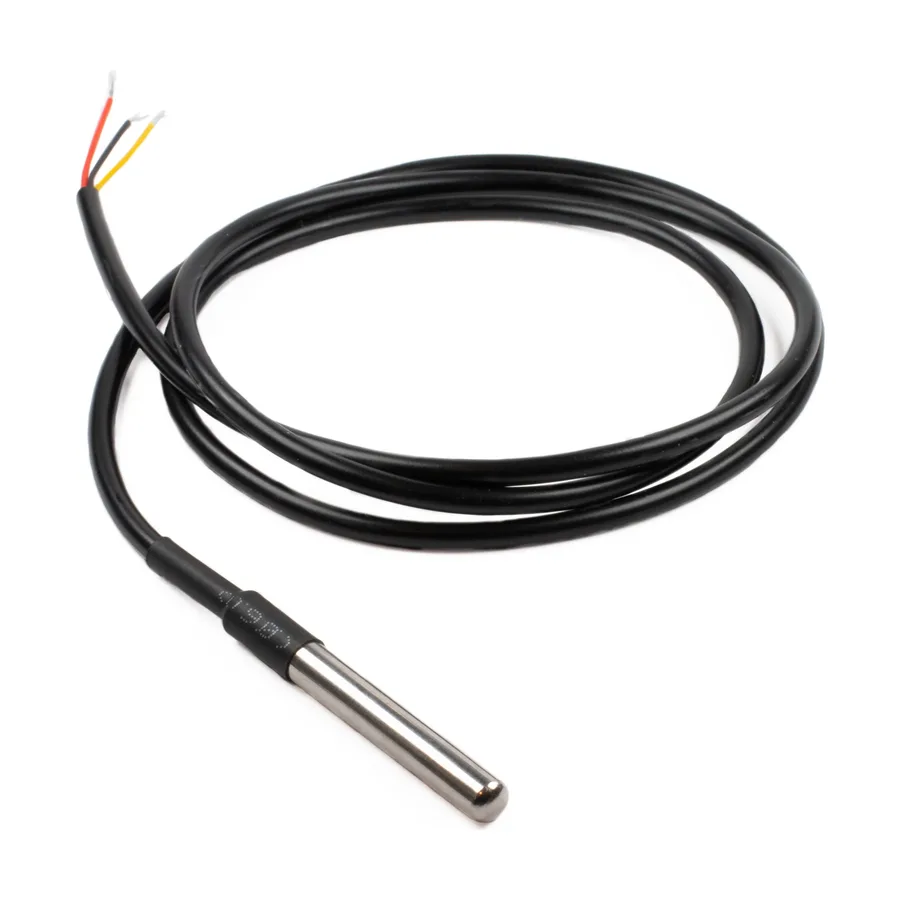
SKU: DS18B20
Waterproof digital probe for water, fridge, egg room and surface temperature.
The DS18B20 is a digital temperature probe: a sealed metal tip 6 mm in diameter on a waterproof PVC cable 1 to 3 m long. The tip is rated IP68, so it can stay under water, and it measures from -55 to +125 °C with an accuracy of ±0.5 °C between -10 and +85 °C.
A house sensor hangs in the air and reads the air. Several temperatures that decide how a flock performs are found elsewhere: in the water the birds drink, in the concrete the chicks stand on, in the fridge where the vaccine waits, and in the room where the eggs are held. Each of these needs a small probe that can be put in contact with the thing itself, and that is the job of the DS18B20.
Water in a drinker line moves slowly. In a house full of birds on a hot day it takes up the heat of the house, and water that stood in a roof tank or in a pipe in the sun arrives warm before it reaches the line. Birds drink less when the water is warm, and in hot weather a bird that drinks less also eats less. Warm, slow water is also where biofilm grows fastest inside the lines.
A probe in the header tank, or in the line at the far end of the house, shows how warm the water gets and at which hours. With that record a grower can judge what a line flush does and how long the effect lasts, whether shading or insulating the tank helped, and whether the last drinkers of a long line get the same water as the first.
The tip is small enough to pass through a tank lid or a fitting at the end of a line, and being IP68 it stays in the water for the whole flock.
Chicks lose heat through their feet and their bellies. In a house that was washed and left empty in cold weather the concrete is cold, and it warms far more slowly than the air above it. When preheating starts the day before placement, the air sensor can reach its target while the slab under the litter is still well below it, and the chicks then sit on a cold floor in a house that looks ready.
A probe fixed against the slab, under the litter, shows the temperature the chicks will stand on. It tells the grower when to start the heaters for the next winter flock, because the record shows how many hours the floor needed this time. The floor and litter targets for placement are given in the breed management guide.
The same method works on a wall or a ceiling panel. A probe taped to the inner surface of an outside wall shows how cold that surface gets at night, which is useful when condensation or wet litter along the side walls needs explaining.
Poultry vaccines are stored cold, within the range printed on the label, and a live vaccine that has been too warm or has frozen can lose its strength without any visible change. A farm fridge is opened many times a day, sits in a warm service room, and now and then is left ajar or loses power over a weekend. The loss is found weeks later, as a flock that did not respond to its vaccination.
A probe inside the fridge keeps a continuous record of the temperature the vaccine was kept at. Place the tip among the vials, in the middle of the shelf. Lead the cable out past the door seal on the hinge side, and check that the door still closes fully over it.
Eggs wait in the egg room for hours or days before the truck comes. For table eggs the storage temperature protects interior quality. For hatching eggs it holds the embryo at rest until the hatchery is ready, and swings in temperature during storage cost hatchability. The storage temperature to hold depends on the length of storage, and the hatchery or the breed guide for your flock gives the range.
Air temperature in the room changes every time the door opens. The eggs themselves change much more slowly. A probe placed among the trays, in the middle of a stack, follows the temperature of the product. A second probe near the door or the cooling unit shows how the room behaves around it. Hatcheries use the probe in the same way in their own egg store.
The rule is contact. The tip reads its own temperature, so it has to be held against what it measures and shielded from everything else.
The sealed tip is the waterproof part. The cable joint and the far end of the cable are not meant to lie in water, so route them upward and keep them out of puddles and wash water.
The accuracy of ±0.5 °C covers every use described here, from a vaccine fridge to water in a summer house. The resolution is programmable, down to 0.0625 °C at the finest setting, so small and slow changes, such as a slab warming through the night, appear as a smooth curve.
A probe can be checked in a few minutes. A glass of crushed ice topped up with water settles at 0 °C, and a probe stirred in it should read within its accuracy of that. Do the check between flocks, wipe the tip clean, and look along the cable for cuts or damage from rodents.
Most farms start with the points where a wrong temperature costs the most: one probe in the vaccine fridge, one in the egg room where there is one, and one in the drinking water of each house. Farms in cold regions add a slab probe in the brooding area of each house. Tell us which points you want to watch and the distances between them, and we will suggest the number of probes and the cable lengths.
Fix the probe tip in contact with what it measures: immersed in the water, taped to the slab or wall under insulation, or placed among the stored product in the fridge or egg room. The sealed tip is the IP68 part, so keep the cable joint and the controller end out of standing water. It connects to a Genesis controller port set to 1-Wire, and several probes can share one port.
Accuracy is ±0.5 °C from -10 to +85 °C, across a measuring range of -55 to +125 °C. Resolution is programmable from 9 to 12 bit, which is 0.5 down to 0.0625 °C.
The probe tip is sealed and rated IP68, so it can stay immersed. Keep the cable joint and the controller end out of standing water.
Over a 1-Wire digital interface to a Genesis controller, which also powers the probe. Several probes can share one controller port, each identified by its own serial code.
WM-20
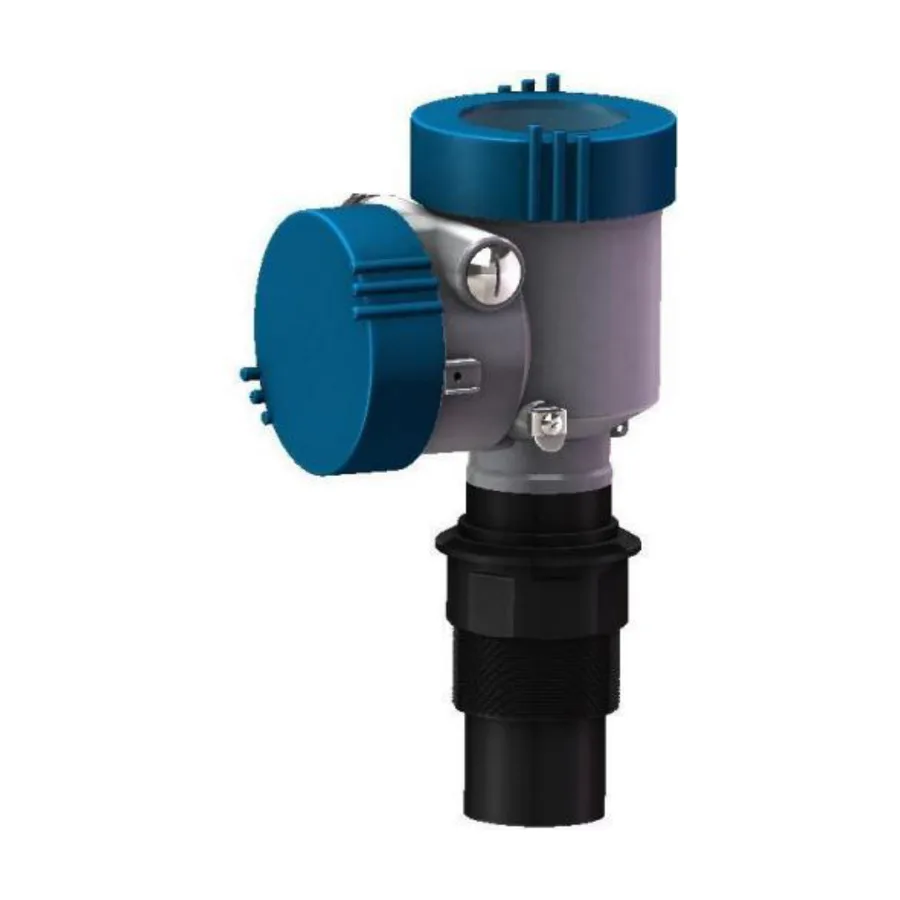
ULM-100
Send the number of houses, the birds and what you want to watch. You get a proposed set of sensors per house and a quote, with the datasheets.