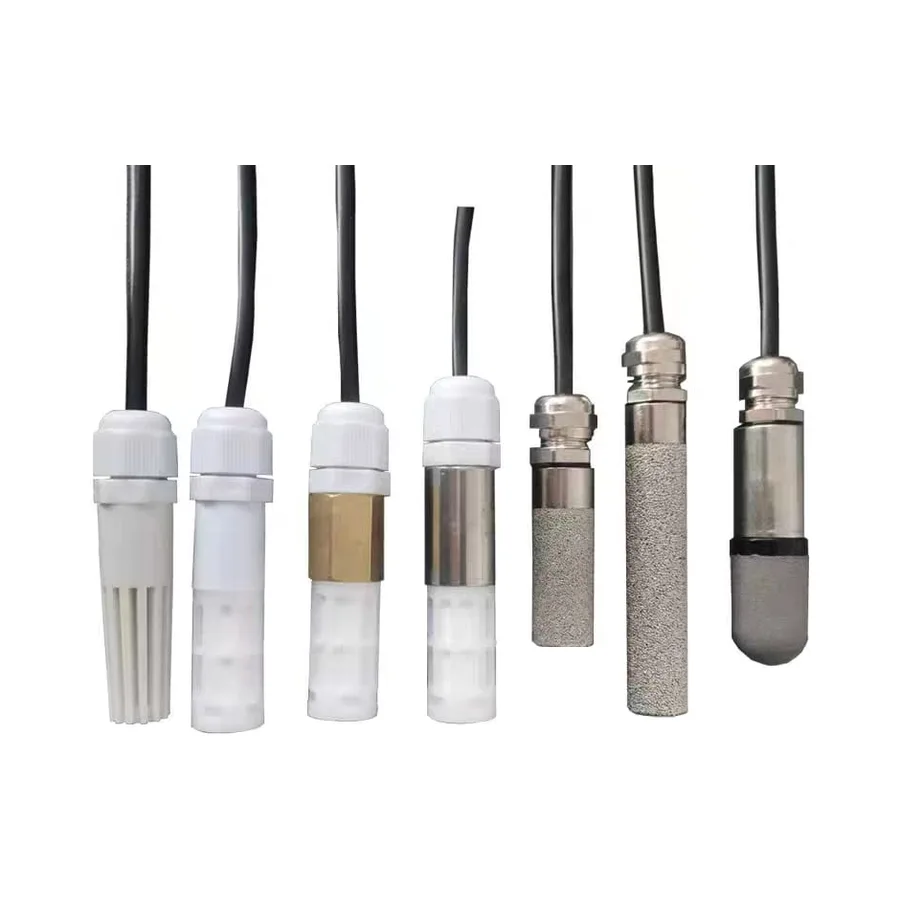
THS-100
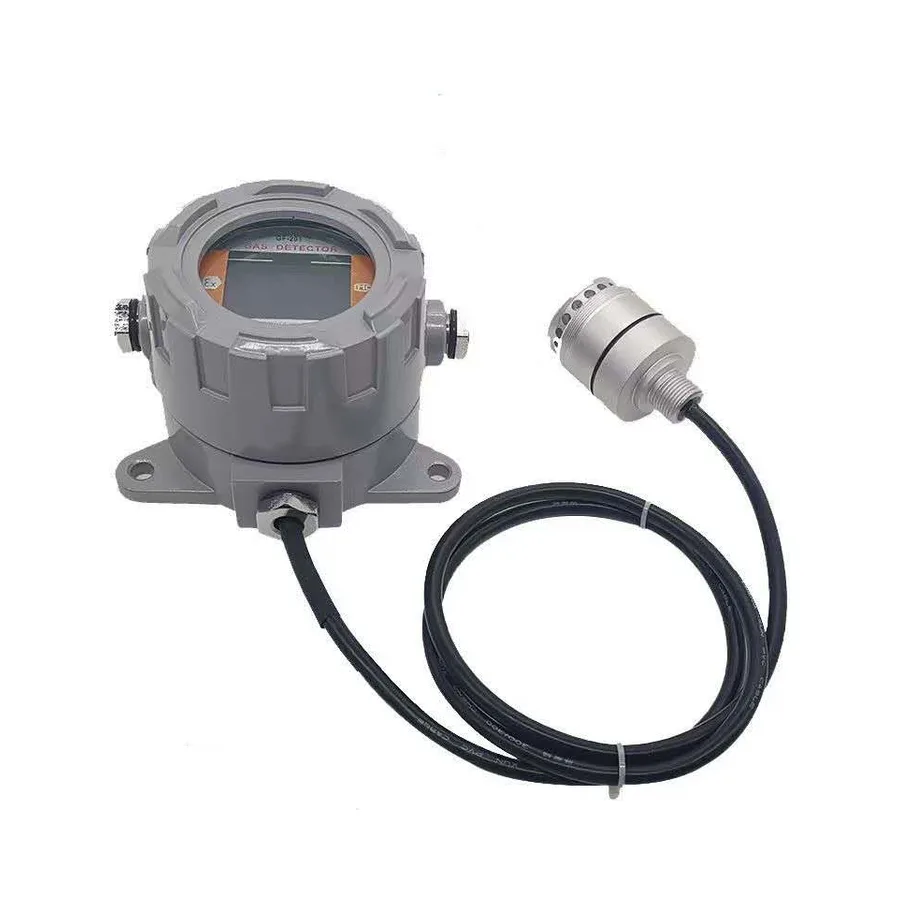
SKU: GF-201-CO2
Measures CO2 from 0 to 5000 ppm as a check on minimum ventilation, with two alarm relays.
The GF-201-CO2 is a fixed carbon dioxide detector. It is mounted on the wall of the house and measures CO2 from 0 to 5000 ppm in steps of 1 ppm. The level is shown on a backlit LCD on the front of the unit, and two alarm relays switch a siren or a warning light when the level passes the limits you have set.
House air reaches the sensing cell by diffusion, and the detector follows a change quickly: it reaches 90% of a new level within 15 seconds. Temperature compensation is automatic. The electronics are housed in a flameproof aluminium alloy enclosure rated IP65, built for dust, humidity and spray. The whole unit weighs 1.2 kg and measures 196 × 140 × 91 mm.
There are two sources. The first is the birds, which breathe out CO2 in proportion to their body weight and their activity. The second is the heating. A direct-fired gas heater or a brooder without a flue burns its fuel inside the house, and everything that comes out of the flame stays in the house air: heat, water vapour and carbon dioxide.
Ventilation is the only thing that removes it. For that reason the CO2 level is a direct check on air exchange. When the house gets enough fresh air for the birds and the heaters in it, CO2 stays low. When the fans move too little air, CO2 climbs, and the humidity and the other gases that the same air should have carried out climb with it.
EU Council Directive 2007/43/EC, which covers chickens kept for meat, sets a limit of 3000 ppm CO2 measured at the level of the chickens' heads for houses stocked at the higher densities. The standard range of the detector runs to 5000 ppm, so the limit sits well inside the scale with room above it.
Brooding is the period when carbon dioxide deserves the closest watch. The house is shut tight to hold the temperature the chicks need. The heaters burn for most of the day and night. The fans run on the lowest setting of the whole flock, because the chicks are small and nobody wants a draught at floor level. All three conditions push CO2 up at the same time.
The rise often starts before the chicks arrive. During preheating the house is closed and the heaters run at full output for many hours to warm the floor and the litter. With no ventilation at all, a house can be high in CO2 at the hour of placement. A detector on the wall shows the level during preheating, and a short period of ventilation before the truck arrives brings it down.
Chicks in air with too much CO2 are quiet in the wrong way. They sit, they are slow to spread out, and they are slow to find feed and water. The first days of feed and water intake set the course for the flock, so a problem that makes chicks inactive in the first week costs growth that is hard to recover later. The grower who walks in sees calm chicks and a warm house, and the cause is not visible. On the display it is a number.
The detector has a low alarm and a high alarm, each on its own relay. A sensible arrangement is to use the low alarm as a signal to the person on duty and the high alarm as a call for immediate attention.
The low alarm can switch a lamp at the house door or in the service room. When it lights, the minimum ventilation setting is behind the needs of the house and should go up a step. The high alarm can switch a siren. It covers the night when a minimum ventilation fan has stopped, an inlet has stayed shut, or a heater is burning badly.
The relay contacts are normally open and voltage-free, rated for AC 120 V 0.5 A or DC 24 V 1 A. A small siren or lamp within that rating connects directly, and a larger load is switched through a contactor. The detector also gives a 4-20 mA signal, for farms whose climate computer accepts a CO2 input.
Carbon dioxide is heavier than air, so the detector is mounted low on the house wall, 0.3-0.6 m above floor level. That height has a second advantage in a poultry house: it is close to the air the birds breathe.
Keep the detector clear of splashing water, oil and mechanical impact, and keep the gas inlet free of dust and deposits. A detector at this height is within the working zone of the house, so the position needs some thought.
Dust is the daily enemy of any gas detector in a poultry house, and more so for one mounted low. Wipe the housing and clear the gas inlet when you walk the house. Litter depth changes through a flock, so check now and then that the litter has not been pushed up against the wall under the detector.
Calibration is done at least once every six months, from the menu on the front panel, by trained personnel using certified gas. The zero is set in clean air. The span is set with certified CO2 gas at a value near half of full scale, applied to the sensor for 2-3 minutes until the reading is steady. After calibration the alarms and the outputs are checked for a correct response. A menu option restores the factory calibration if a setting has been changed by mistake.
The turnaround between flocks is a convenient time for this work. Cover the detector during wash-down and keep the pressure washer away from the sensing head. The sensing cell is a replaceable part, and it is changed at the end of its life so that the detector keeps its accuracy.
The standard 0-5000 ppm range is the one for poultry houses. Ranges of 0-1000 ppm, 0-2000 ppm and 0-20 %VOL are available on request for other rooms and uses. The accuracy is within 3% of full scale and the repeatability within 1%, so on the standard range a change of a few hundred ppm between one night and the next is a change in the house and can be acted on.
Broiler houses use the detector most heavily during brooding and on cold nights. In layer and breeder houses the birds are the main source of CO2, and the level rises in winter, when the ventilation is turned down to keep the house warm. One detector for each house, or for each brooding section when chicks are started in part of the house, is the usual starting point.
The GF-201-CO2 is the model for a house where the CO2 level should be readable on the wall and a siren or light should be switched by the detector itself. The CO2-210 is a compact infrared sensor that measures CO2 in the house air over the same 0-5000 ppm range. It suits a house where a small measuring point is all that is wanted. Tell us how the house is heated and ventilated, and we will suggest the model and the position.
CO2 is heavier than air, so the detector mounts low on the house wall, 0.3-0.6 m above floor level. Keep it clear of splashing water, oil and mechanical impact, and keep the gas inlet free of dust and deposits. It connects to the Genesis controller over RS485 and runs on 12-30 VDC.
The standard range is 0-5000 ppm at 1 ppm resolution, above the 3000 ppm limit in EU Council Directive 2007/43/EC. Ranges of 0-1000 ppm, 0-2000 ppm and 0-20 %VOL are available on request.
The recommended interval is at least once every six months. Calibration is done from the front-panel menu by trained personnel using certified CO2 gas.
Yes: it has its own display, two alarm relays, a 4-20 mA output and RS485 Modbus-RTU, so it also connects to a PLC or another controller. A Genesis controller adds phone alerts and stored history.
THS-100
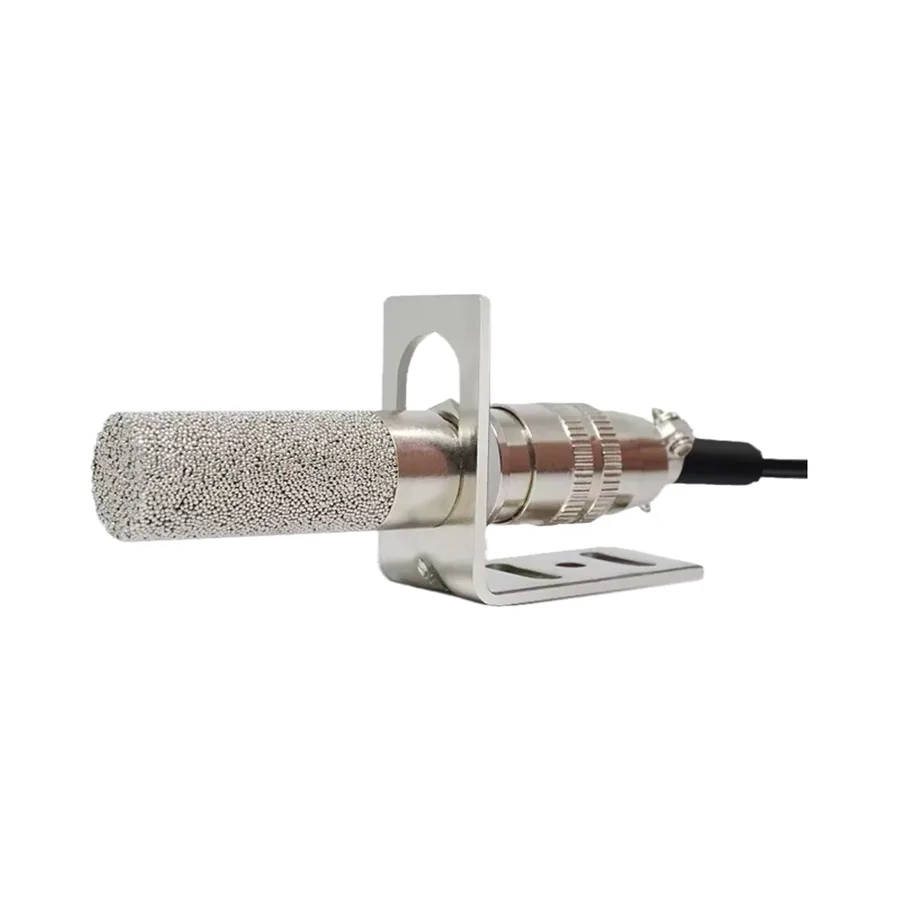
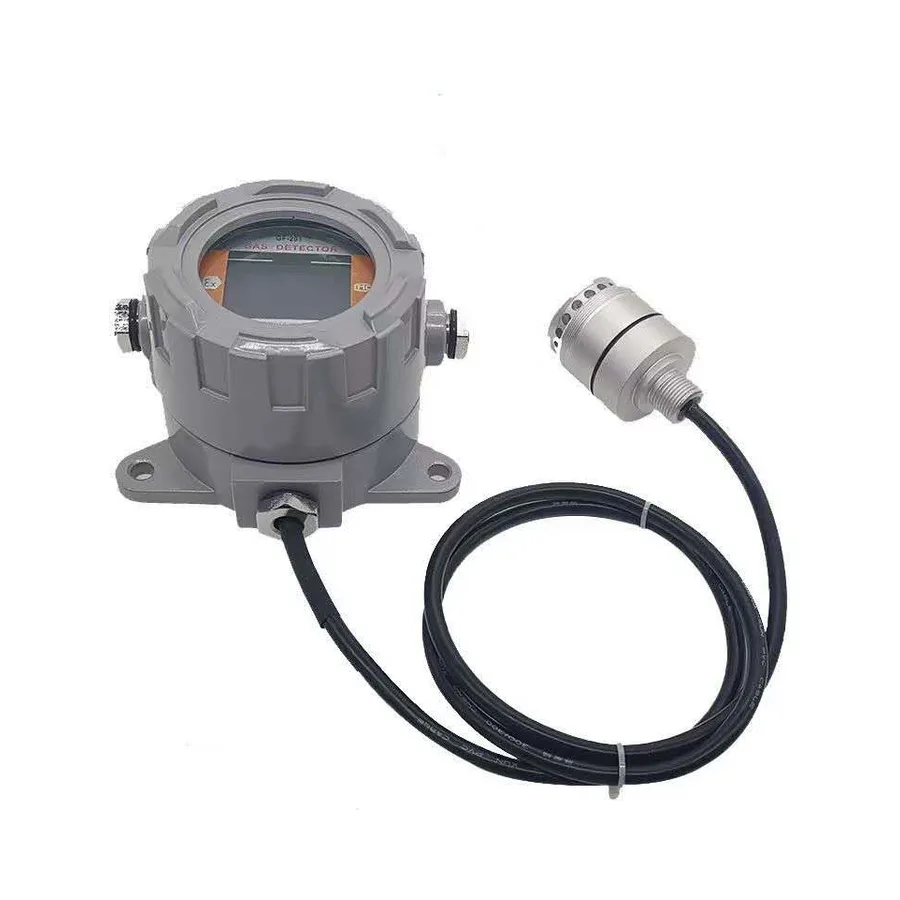
GF-201-NH3
NH3-210
Send the number of houses, the birds and what you want to watch. You get a proposed set of sensors per house and a quote, with the datasheets.